

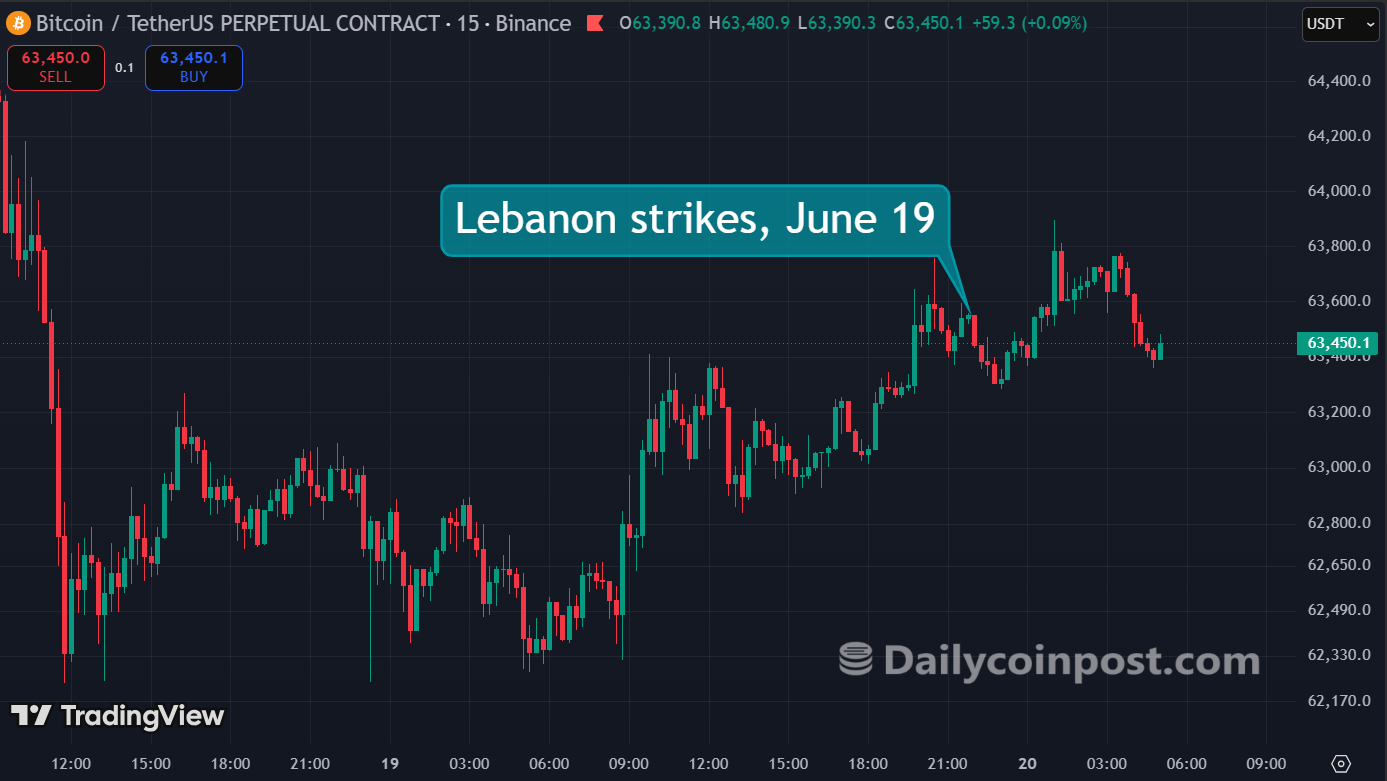
Trump and Iranian President Pezeshkian digitally signed a memorandum of understanding on June 17. The follow-up technical talks were scheduled for June 19 in Switzerland, where negotiators were supposed to start converting the broad agreement into an actual implementation plan covering the nuclear program, sanctions relief, and the Hormuz toll dispute.
Those talks did not happen. Israeli strikes in southern Lebanon killed at least 47 people on June 19, the second deadliest day on that front since fighting resumed in March. JD Vance canceled his trip to Switzerland. The Swiss Foreign Ministry confirmed the talks were off. Iran demanded a guarantee that Israel would stop before sending its delegation anywhere.
A ceasefire between Israel and Hezbollah went into effect by 4pm that same day, brokered with US, Qatari, and Iranian help. The immediate crisis cooled. The talks are still not back on the calendar.
We Have Seen This Exact Movie Twice
In early April, Israeli strikes on Beirut threatened to derail planned talks in Islamabad the same weekend they were scheduled. Washington pressured Netanyahu to scale back. The talks survived, barely.
In early June, Israel struck south Beirut 48 hours before Trump was set to announce a completed deal. Iran retaliated. The announcement that was supposed to happen Monday morning did not happen for another eleven days.
Now, two days after the actual memorandum got signed, the same thing happened a third time. Different city in Lebanon, different death toll, same mechanism. Israel acts unilaterally against Hezbollah. Iran treats it as a violation of the spirit of the deal. The US scrambles to hold the broader agreement together while managing an ally it does not fully control.
Three times. Not a coincidence. A pattern.
What the Pattern Actually Is
The US and Iran are negotiating one conflict. Israel is fighting a separate, related one against Hezbollah in Lebanon that runs on its own timeline and its own military logic. Washington can shape the US-Iran track. It has much less control over when Israel decides to strike Hezbollah targets, and Hezbollah is explicitly backed by Iran, which means every Israeli strike in Lebanon reads in Tehran as a strike on the broader deal itself.
That structural gap between what the US can promise and what Israel will actually do is the single biggest risk to this entire deal holding for the 60 days both sides agreed to. It is not a footnote. It is the central fragility.
We wrote when the deal was first announced that a statement is not a signature. The memorandum got its signature on June 17. What this week shows is that even a signature is not an implementation plan, and an implementation plan that depends on a third party staying calm is exactly as stable as that third party’s restraint.
What This Means for Bitcoin
Bitcoin has spent four months learning to discount headline optimism on this war because the optimism kept getting interrupted by exactly this kind of event. The 60-day toll clock on Hormuz already meant the market could not treat June 17 as a clean resolution. This week adds a second source of fragility on top of the first. Oil at $77 reflects a market that has priced significant de-escalation. It has not priced a deal that is fully secure, because the deal is not fully secure.
The mechanism we wrote about with oil pricing applies here too. Markets price the path, not a single destination. Every time this pattern repeats, the market’s confidence in the next milestone gets a little more conditional. The first false start cost the optimism real estate. The second one cost more. This third one, with a ceasefire restored within hours, probably costs less precisely because traders have now seen the recovery happen twice before.
That is not nothing. A market that has learned a crisis tends to resolve within a day reacts less violently the third time the crisis appears. Bitcoin barely moved on this one compared to how it moved on the April and June episodes. That itself is the story. Not that the war flared up again. That it flared up again and nobody panicked.
The deal is not dead. The 60-day clock that started June 17 is still running. What this week confirms is that the clock has at least one recurring failure mode built into it, and the market now knows its shape well enough to stop overreacting to it.