

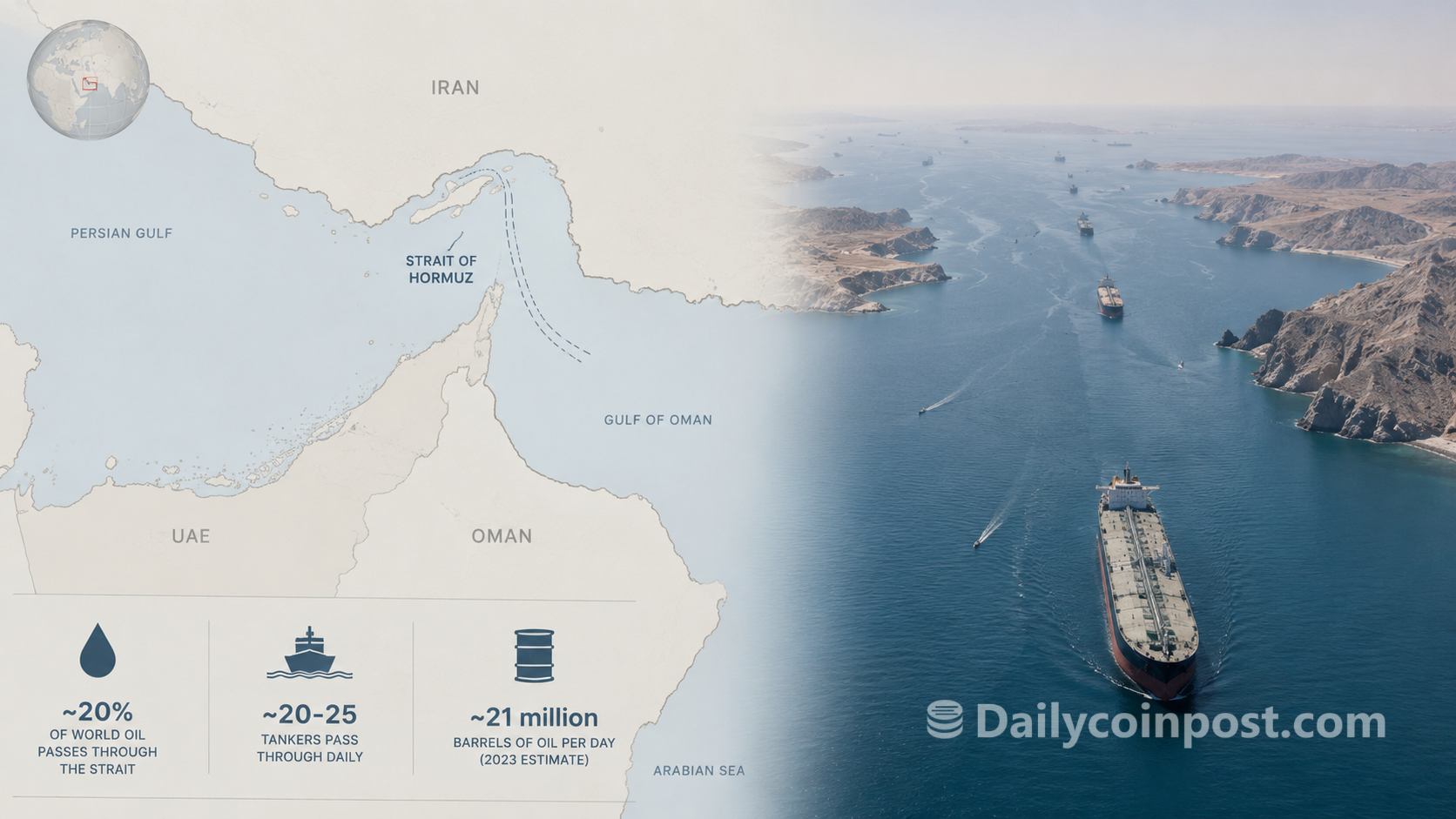
Brent crude traded at $80 on June 18, the day the Strait of Hormuz formally reopened. A month ago it was at $112.93. That is a 30% drop. The strait opening should have been the catalyst for that drop. Instead, by the time it actually happened, oil had already fallen and barely moved on the news itself.
Most of the explanation circulating today points to logistics. Around 500 vessels are reportedly still stranded in the Persian Gulf. Shipowners and insurers want confirmed mine clearance before committing vessels to the lanes. The EIA’s June outlook assumes the strait stays effectively constrained through most of summer, with traffic only normalizing in early 2027. Rystad Energy’s chief economist put it well: sentiment has improved, but sentiment is not supply.
All of that is true. None of it is the full story.
The Crash Already Happened
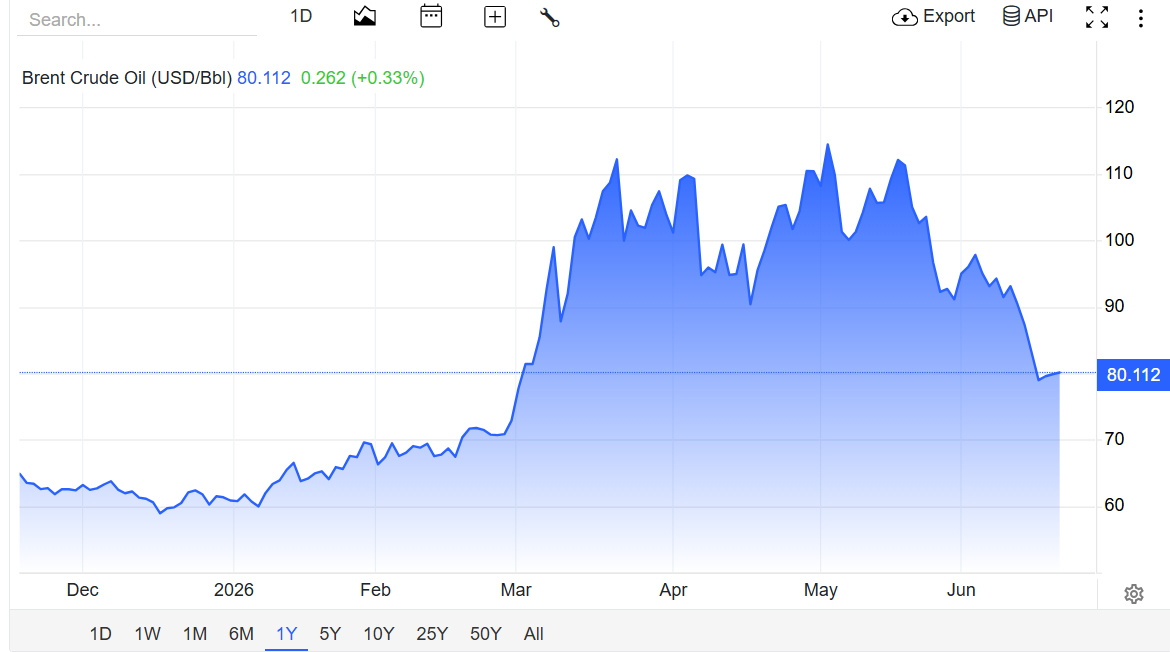
Brent crude’s path tells the whole story. The price did not crash on the strait reopening, it climbed and fell in steps as each deal signal arrived over the prior month, settling near $80 well before June 18. Source: Tradingeconomics.com
We wrote yesterday that markets price intentions before institutions act on them. Oil is the cleanest example of that mechanism running in real time.
The Iran deal did not arrive as a single surprise event on June 18. It arrived as a month-long sequence of signals. Trump’s Truth Social posts. The Pakistani PM’s comments on troop withdrawals. The memorandum confirmation. Iran’s Deputy Foreign Minister on state media. Each signal told the market something about where this was heading before the strait physically reopened.
A market trading oil futures does not wait for the ribbon-cutting ceremony. It trades the probability of the ribbon-cutting ceremony the moment that probability becomes visible. Every one of those signals over the past month nudged the probability of a reopening higher, and every nudge got priced into Brent immediately. By the time the strait actually opened, the event had been priced in installments rather than all at once.
That is why oil did not crash harder on June 18. There was nothing left to crash. The crash already happened, spread across four weeks of incremental signals, each one absorbed by traders the moment it appeared.
What Is Actually Left to Trade
The residual risk premium still sitting in the price is the genuinely interesting part. Markets have not fully priced out the chance that the deal does not hold. The US Navy is still in the Gulf. Iran’s compliance is not guaranteed. That uncertainty is a real input and it is the reason Brent is at $80 rather than $65, which is roughly where pre-conflict pricing sat.
The 60-day toll-free window on the Hormuz passage adds another layer. Iran’s service fees restart in August if the current arrangement holds as stated. The market is not just pricing the deal. It is pricing the deal’s expiration date, which is a fact that already exists today even though its consequences arrive two months from now.
This is the same mechanism that kept Bitcoin from crashing or rallying as hard as the headlines suggested at each stage of this war. Markets do not wait for confirmation. They trade the path, not the destination.
Why This Matters Beyond Oil
The logistics explanation is not wrong. Ships genuinely cannot all transit a narrow strait simultaneously and production genuinely cannot restart instantly after a three-month shut-in. Those are real physical constraints with real timelines measured in months.
But physical constraints explain why supply is slow. They do not explain why price barely moved on the day everyone was told to watch. Price had already moved. It moved every time a signal arrived that made the eventual reopening more likely, which means the actual reopening was the least informative data point in the entire sequence.
The market spent the event before it happened. That is not a flaw in how oil trades. That is the only way a market this liquid, this fast, and this widely watched could possibly work.