
🔄 Updated June 12, 2026
May PPI just came in at 6.5%, the hottest since November 2022. That number lands five days before Kevin Warsh’s first press conference. We covered what that meeting means for Bitcoin here.
Yesterday the market had an argument. Energy drove CPI higher, not the broader economy. Iran war, gasoline prices, a one-time supply shock that would fade once the Strait of Hormuz situation resolved. Strip out energy, core at 2.8% was uncomfortable but manageable. Rate cuts were delayed, not dead.
Today’s PPI report destroys that argument.
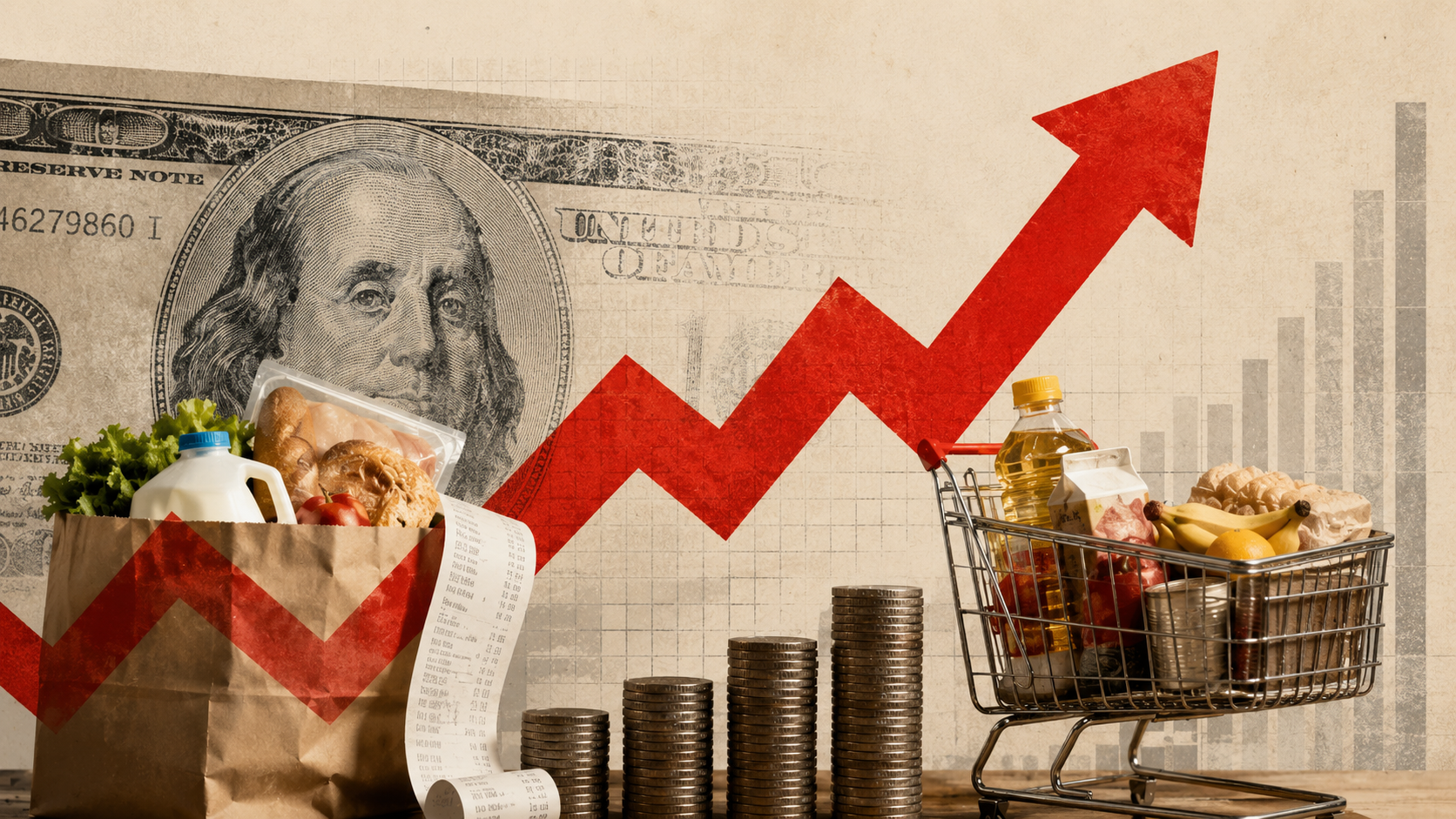
April Producer Price Index came in at 6% year over year, the highest reading since December 2022. The forecast was 4.9%. That is not a rounding error. A 1.1 percentage point miss on an annual basis is the kind of number that rewrites the macro narrative in a single morning.
PPI 6% YoY, Est. 4.9%
PPI 1.4% MoM, Est. 0.5%PPI Core 5.2% YoY, Est. 4.3%
PPI Core 1% MoM, Est. 0.3%— Wall St Engine (@wallstengine) May 13, 2026
Month over month, PPI rose 1.4% against a consensus of 0.5%. The largest single-month gain since March 2022. Core PPI, which excludes food and energy, came in at 5.2% annually against a 4.3% forecast. Core monthly rose 1%, triple the 0.3% estimate.
That last number is the one that matters. Core PPI at 5.2% has nothing to do with gasoline. Nothing to do with the Strait of Hormuz. It is services, trade margins, industrial chemicals, truck freight, legal services. It is the price of things that do not move because of oil.
“Inflation is sticky and accelerating. The core reading confirms a deeper structural trend, especially in services,” said David Russell, global head of market strategy at TradeStation. “The Hormuz crisis is aggravating the problem, but this goes way beyond oil.”
Why PPI Is the Number That Actually Matters
Producer prices lead consumer prices by three to six months. What businesses pay today to produce goods and services becomes what consumers pay by summer. Yesterday we wrote that CPI showed inflation spreading beyond energy into shelter, apparel, and airfares. Today’s PPI tells you that pipeline is not clearing. It is filling up.
The BLS report shows nearly 60% of April’s PPI rise came from services, not goods. Services inflation at 1.2% monthly is the largest gain since March 2022. Two-thirds of that services move came from trade services, a direct signal that tariff costs are now flowing through wholesale margins into the distribution chain.
Stage 1 intermediate demand, which measures prices at the earliest point in the production pipeline, rose 8.9% annually. The largest gain since October 2022. That number has not shown up in CPI yet. It will.
The energy-driven excuse runs out here. You cannot blame gasoline for a 5.2% annual rise in core producer prices. You cannot blame the Iran war for a 1% monthly jump in trade service margins. What these numbers show is an economy where price pressures have embedded themselves across every layer of the production chain.
The Fed’s Problem Just Got Worse
Yesterday the Fed was trapped. Three bad options, no clean exit. Today that trap has walls.
Before this morning’s print, CME FedWatch showed rate hike odds for 2026 sitting near 30%. Kalshi had climbed to 27% from 18.2% a month ago. Those numbers will move higher. A 6% PPI print with core at 5.2% is not the data profile of an economy where the Fed can cut, hold indefinitely, or stay quiet.
Kevin Warsh takes over as Fed chair on May 15. Two days from now he inherits a 3.8% CPI print from Tuesday, a 6% PPI print from today, rate hike expectations climbing, and a policy mandate that requires him to bring inflation to 2%. That target is not a 2026 story under any credible scenario. JPMorgan’s most optimistic model, one where Iran resolves quickly and oil normalizes, still has CPI above 3% through February 2027.
Warsh has positioned himself as a lower-rates advocate. That position just became nearly impossible to hold publicly. The bond market will test him immediately.
What This Means for Bitcoin
Bitcoin is sitting at $79,600 this morning, below the $80,000 level that the 200-day moving average rejection at $82,000 flagged as critical resistance four days ago. RSI on the 15-minute chart hit 20 on the PPI release, deeply oversold territory.
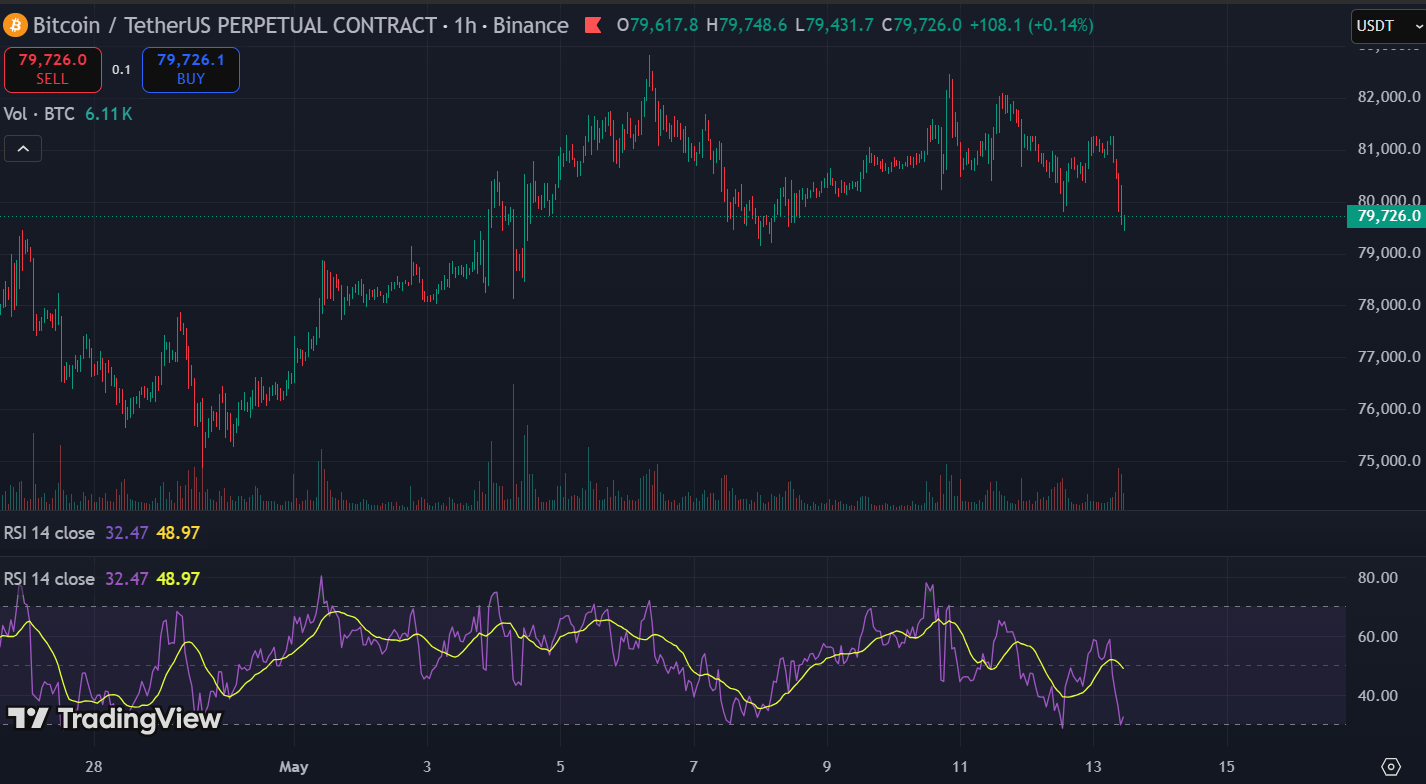
Bitcoin rejected at $82,000 on May 9 and lost $80,000 support after April PPI came in at 6%. Current price $79,726. RSI at 32.47. Source: TradingView
The macro picture is straightforward. Higher producer prices mean higher consumer prices in three to six months. Higher consumer prices mean the Fed cannot cut. A Fed that cannot cut, and may need to hike, is not the environment where risk assets find new highs easily.
The one remaining near-term catalyst for crypto is Thursday’s CLARITY Act markup. A clean Senate Banking Committee vote advancing stablecoin legislation gives the market a legislative tailwind at exactly the moment macro is working against it. If the markup stalls, the market is left with two consecutive inflation shockers, a new Fed chair with no room to move, and $79,600 as the line to watch.
Above $80,000 the structure is damaged but intact. Below it, the next support is a conversation nobody wants to have yet.