
Three months ago the question was when the Fed would cut. Two months ago it became whether the Fed would cut. This morning it became something nobody wanted to say out loud.
Whether the Fed needs to hike.
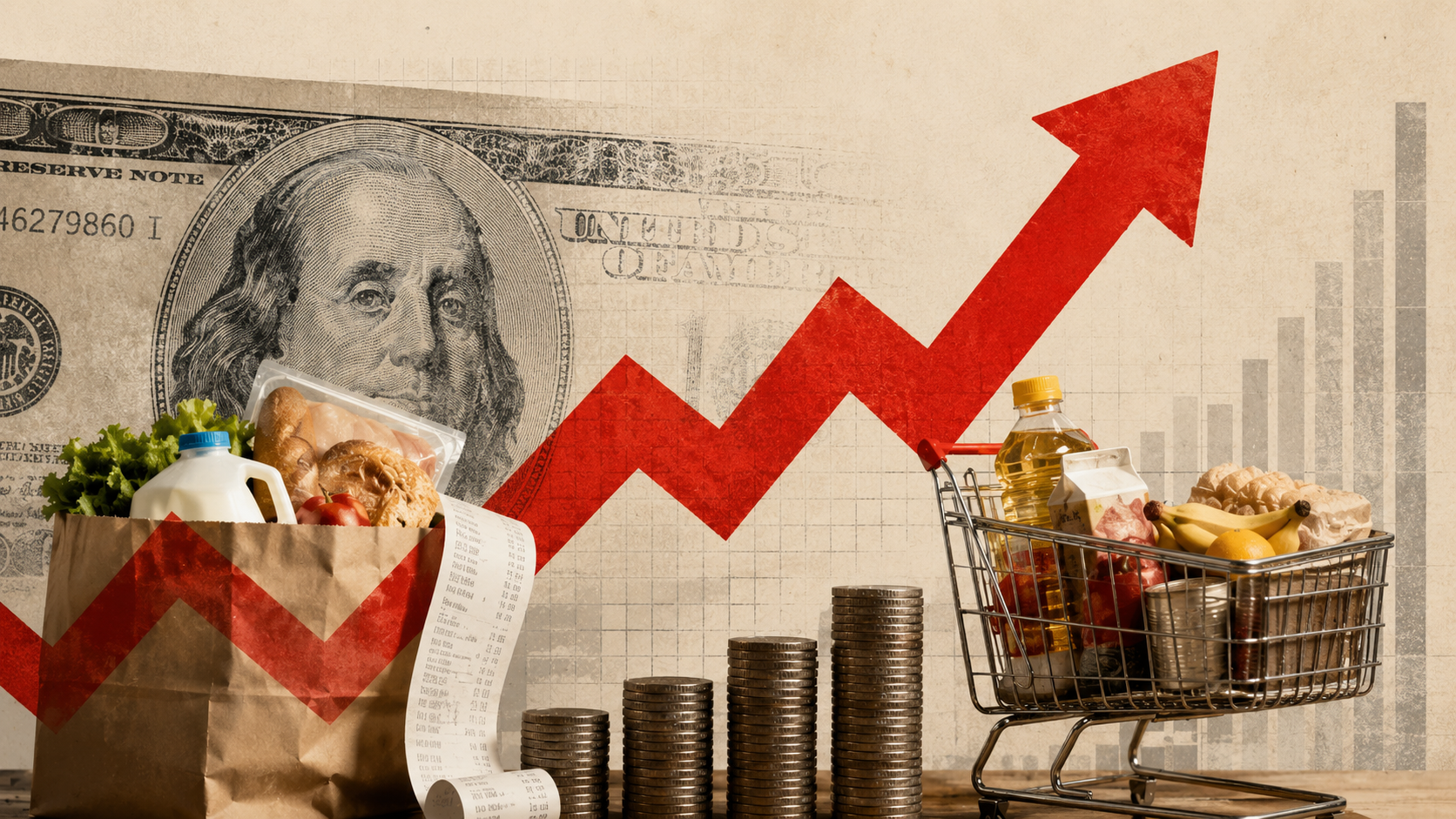
April CPI came in at 3.8% year over year, its highest reading since May 2023. Core CPI, which strips out food and energy and is the number the Fed actually watches, rose to 2.8%, above the 2.7% forecast. Traders moved immediately. Rate hike odds by year end climbed to roughly 30% according to CME FedWatch data. A month ago Kalshi markets assigned an 18.2% probability to a hike occurring in 2026. That number is now 27% and climbing.
BREAKING: April CPI inflation rises to 3.8%, its highest level since May 2023.
Core CPI inflation also rose to 2.8%, above expectations of 2.7%.
We are now experiencing post-pandemic inflation levels amid surging oil prices.
Odds of Fed rate HIKES are surging.
— The Kobeissi Letter (@KobeissiLetter) May 12, 2026
This is not a hot print in a vacuum. It is the third consecutive month of accelerating inflation. March CPI was 3.3%. February was 2.4%. The trajectory is moving in one direction and it is not toward the Fed’s 2% target.
What the Number Actually Shows
Energy is the obvious culprit and the easy dismissal. Gasoline is up 28.4% annually. Oil is running above $100 a barrel because the Iran war has disrupted roughly 20% of global oil transit through the Strait of Hormuz. Strip out energy and the story looks better.
Except it does not look better. That is the part worth reading carefully.
Shelter costs rose 0.6% in April after easing in prior months. Apparel jumped 0.6%. Airline fares accelerated 2.8% on the month, putting the 12-month gain at 20.7%. Real average hourly wages slipped 0.5% for the month and fell 0.3% annually. Workers are earning less in real terms as prices continue to climb.
Core inflation at 2.8% is not an energy story. Energy does not move shelter costs. It does not move apparel. It does not move airfares by 20% annually. What those numbers show is that inflation has spread from the Iran war shock into the broader economy. That is the scenario the Fed has been trying to prevent since February.
“Given that inflation is heading in the wrong direction and the labor market is holding up, it is very unlikely that the Fed will be able to lower interest rates any time soon and it is possible that we may start pricing in rate hikes for next year,” said Chris Zaccarelli, chief investment officer at Northlight Asset Management.
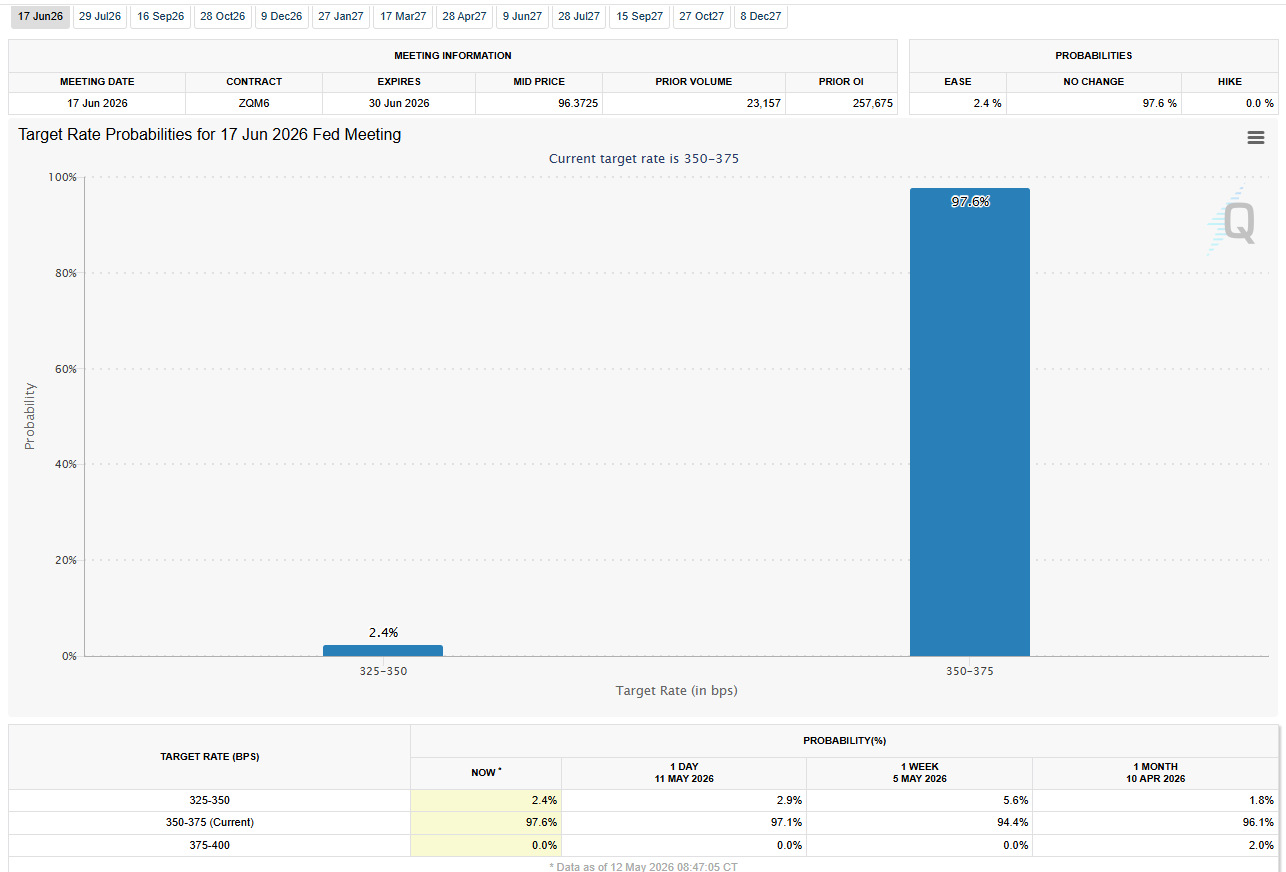
Fed Interest Rate Cut Probabilities. Source: CME FedWatch Tool
The Fed Is Trapped
The Fed held rates at 3.50% to 3.75% at its April meeting. Before this morning’s print, markets were pricing a 97.6% probability of another hold at the June 17 meeting. That part has not changed. June is still a hold.
What has changed is everything after June.
Bank of America no longer expects any rate cuts in 2026. JPMorgan has run three inflation scenarios and in every single one, including its most optimistic case where the Iran conflict resolves quickly, CPI remains above 3% until February 2027. The Fed’s 2% target is not a 2026 story under any scenario JPMorgan models.
The trap is this. Cut rates and you risk re-accelerating inflation that is already at a three-year high. Hold rates and you risk tipping an economy where consumer sentiment has hit all-time lows and real wages are falling. Hike rates and you deliberately cause the recession you have been trying to avoid.
There is no clean exit. April CPI just made all three doors worse.
Kevin Warsh Walks Into This on May 15
Three days from now, Kevin Warsh replaces Jerome Powell as Fed chair. He inherits a 3.8% inflation print, a 30% market-implied probability of a rate hike, and a policy framework that has no obvious next move.
Warsh has publicly advocated for lower rates. That position just became significantly harder to defend. Lower rates with inflation at 3.8% and climbing is not a policy. It is a political statement. The bond market will price it accordingly, Treasury yields will move higher, and every rate-sensitive asset takes the hit.
His first press conference as chair, his first data release, his first public statement about policy direction all now happen in a context he did not choose and cannot easily navigate. The institutional crypto community has been cautiously optimistic about Warsh because he called Bitcoin the new gold for people under 40. That sentiment is worth less than it was yesterday.
What This Means for Bitcoin and Crypto
Bitcoin held $80,600 through the release, which is notable. The 200-day moving average rejected price at $82,000 four days ago. The CPI print is the macro confirmation of what the chart already showed. The ceiling is real and the path higher requires either inflation rolling over or a policy catalyst that offsets the macro headwind.
The CLARITY Act markup on Thursday is that potential catalyst. A clean vote that advances stablecoin legislation gives crypto a legislative tailwind at exactly the moment macro is working against it. If the markup stalls, the market loses its last near-term positive catalyst and sits with a bad CPI print, a rate hike conversation, and a new Fed chair who cannot cut.
Above $80,000 the structure holds. Below it the picture changes.
The Bigger Problem Nobody Is Naming
April CPI at 3.8% is not just a monetary policy problem. It is a purchasing power problem for every American holding cash.
Your savings account pays below 0.5%. Inflation is running at 3.8%. Real wages fell 0.3% annually. In practical terms, cash is losing value faster than at any point since 2023 and the instruments that were supposed to compensate for that, rate cuts, stablecoin yields, real returns on deposits, are either off the table or being actively lobbied against.
Banks spent Mother’s Day lobbying Congress to kill stablecoin yields before Thursday’s CLARITY Act vote. This morning’s inflation data is the clearest possible argument for why that fight matters. When the Fed cannot cut and banks will not pay, the only question is whether Congress lets an alternative exist.
Thursday’s vote answers that question. This morning’s CPI print tells you why it matters more than most people realize.