


Michael Saylor built his entire identity around one idea. Buy Bitcoin. Never sell. Hold forever.
He said it on stage, on podcasts, in shareholder calls, in tweets. “The highest, best use of bitcoin is to buy bitcoin and hold.” The endgame was always the same: acquire more BTC. Whoever gets the most wins. No other endgame.
On Monday night that position quietly died.
What Saylor Actually Said
During Strategy’s Q1 2026 earnings call, Saylor told investors the company would probably sell some Bitcoin to pay dividends. His exact framing: “We will probably sell some Bitcoin to pay a dividend just to inoculate the market and send the message that we did it.” (CoinDesk)
CEO Phong Le added that the company would also consider selling Bitcoin “when it’s advantageous to the company.”
The market responded immediately. Strategy shares dropped 4% after hours. Bitcoin slipped below $81,000.
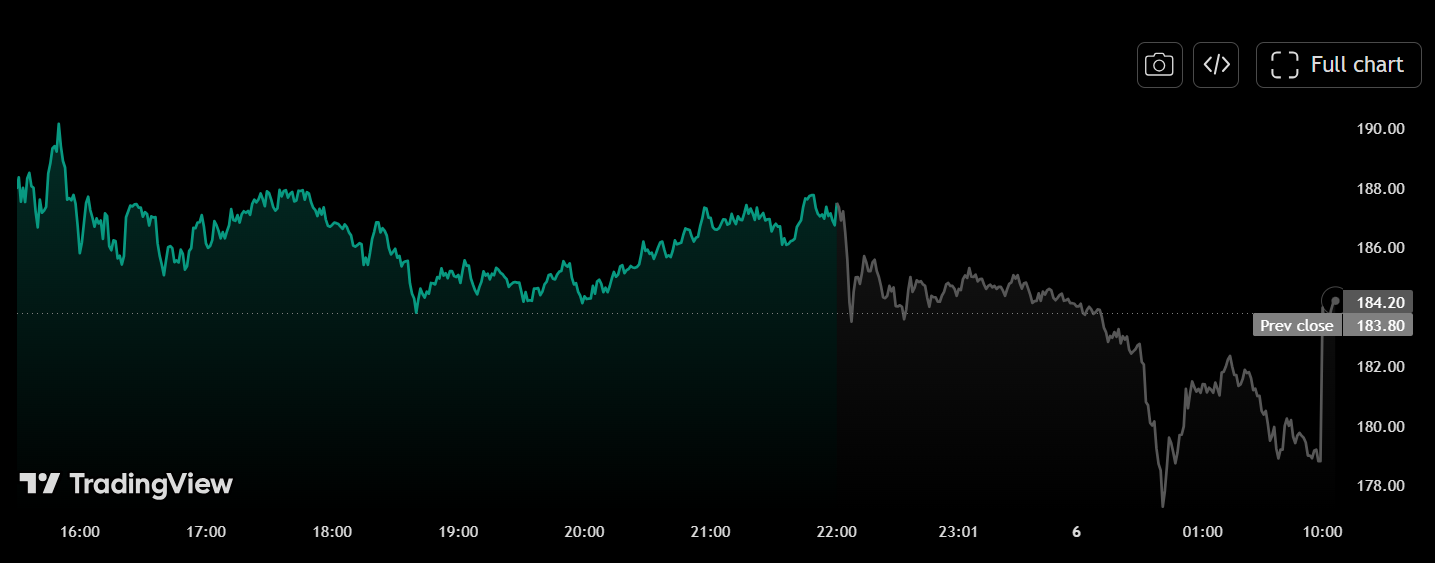
Strategy Inc chart – Source: Tradingview
The Numbers Behind the Reversal
Strategy reported a $12.54 billion net loss for Q1 2026. The company holds 818,334 Bitcoin at an average cost of $75,537 per coin. Against that sits $1.5 billion in annual dividend obligations, with roughly 18 months of coverage remaining.
The company has issued two series of preferred stock. STRK yields 8%. STRF yields 10%. Both are perpetual. Those dividends have to be paid in cash, not Bitcoin, which creates a structural problem when the business itself generates no operating income worth mentioning.
The math was always going to get here eventually. You cannot run $1.5 billion in annual obligations on a company whose core asset does not generate yield, without eventually selling some of that asset.

The “Buy With Credit, Sell to Pay” Model
Saylor reframed the reversal as strategy rather than retreat. His explanation: “You buy bitcoin with credit, you let it appreciate, and then you sell bitcoin to pay the dividend.”
That is a coherent model. It is also not what he spent five years saying. The version he sold to retail investors, to corporate treasury managers, to the Bitcoin community, was simpler: accumulate, never sell, Bitcoin only goes up and you will be rewarded for conviction.
The credit-buy-appreciate-sell model is a trading strategy. The never-sell model was a religion. One of them survives contact with $1.5 billion in annual obligations. The other does not.
What the Market Thinks
Polymarket traders now price a 48% chance that Strategy sells Bitcoin before December 31, 2026. One week ago that number was 10%. (Yahoo Finance)
That shift in a single earnings call is worth noting. The market had been treating “Strategy sells Bitcoin” as a tail risk. It is now pricing it as roughly a coin flip.
What Actually Changed
Nothing changed about Bitcoin. The supply cap is the same. The protocol is the same. The 21 million coins Saylor has been accumulating are exactly what they were.
What changed is the capital structure Strategy built around Bitcoin. The preferred stock dividends, the convertible notes, the debt load that made the whole strategy work during a bull market creates pressure in a sideways or down market. Strategy has about $8.2 billion in USD-denominated debt that eventually needs to be serviced or repaid.
Saylor could say never sell because for a long time the stock price kept rising and the capital markets kept opening up. New debt could cover old obligations. That window may be narrowing.
The Uncomfortable Part
Strategy holds 818,334 Bitcoin. That is roughly 3.9% of the total supply that will ever exist. If the company starts selling systematically to cover dividends and debt, the amounts involved relative to daily Bitcoin trading volume are not trivial.
Saylor’s never-sell conviction was also a price support. Large holders who announce they will never sell provide a ceiling on potential selling pressure. When that holder says they probably will sell, the math changes slightly for everyone else holding Bitcoin on the assumption that Strategy’s stack is permanently locked.
This is not a crisis. Bitcoin traded through the announcement without breaking anything. But the thesis that Strategy represents permanent demand just got its first real qualification.
Bloomberg reached the same conclusion this week, noting the sale pressure hiding beneath Saylor’s never sell rhetoric.
Saylor built a company around the idea that Bitcoin’s fixed supply and institutional accumulation would drive price up indefinitely. He may now be in a position where he has to test that thesis by becoming a seller. That is a different kind of proof of concept than he was advertising.
Updated May 9, 2026: Bloomberg published a similar analysis confirming Strategy’s preferred stock risk.