


Bitcoin fell from roughly $61,700 to $59,400 on June 24, a 4.85% drop that took out a price floor most traders did not expect to break this week. Wintermute’s options desk had priced Bitcoin in a $61,242 to $63,563 range for the day just hours earlier. The market broke clean through the bottom of that range and kept going, marking a second consecutive day of the chip selloff dragging crypto lower.
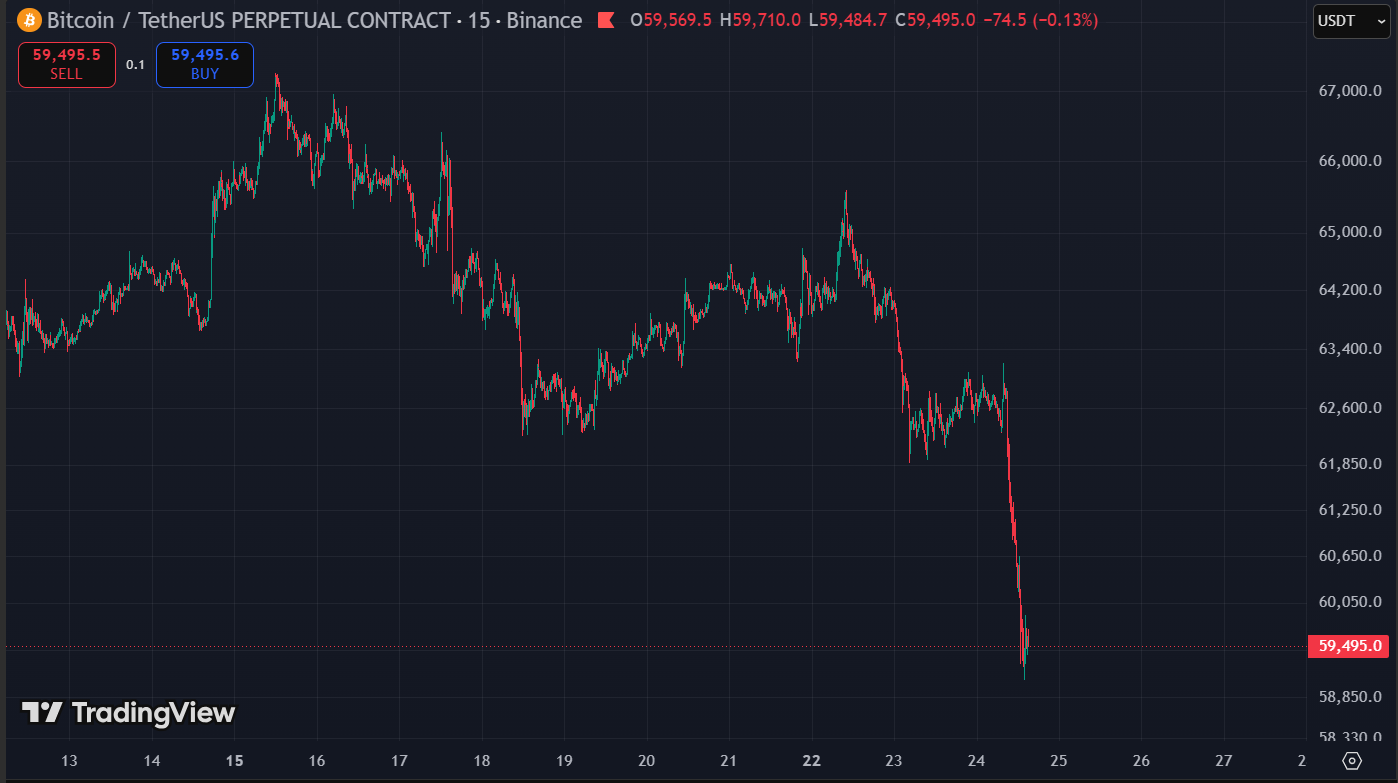
Bitcoin fell to as low as $58,800 intraday on June 24 before recovering slightly to $59,495, marking a sharp acceleration of the selloff that began June 22. Source: TradingView
Here is what actually happened.
What Triggered the Drop
Nvidia fell more than 3% and slipped below a $5 trillion market cap as institutions sold AI and tech stocks broadly. The Nasdaq-100 dropped 2.5%, the S&P 500 fell over 1%. This is the second consecutive day of a chip stock selloff that started a day earlier and is now deepening rather than fading.
Bitcoin fell alongside it. Not because of anything happening in crypto specifically. Ether dropped nearly 6% to $1,568. Solana fell almost 5%. XRP lost 4.68%. Every major token on the board was red, and the size of the losses tracked almost exactly with how exposed each asset has become to the same institutional flows that have been buying AI stocks and Bitcoin together for two years.
Funds that piled into Nvidia, AMD, and Bitcoin during the liquidity-driven rally of 2024 and 2025 are now trimming all three at once. That is not a crypto story. That is a single trade unwinding across two asset classes that got bundled together by the same money.
The Fed Made It Worse
Underneath the tech selloff sits a second problem. Nine of nineteen FOMC officials now project at least one rate hike before the end of 2026. In March, that number was zero. The June Fed meeting came in more hawkish than markets expected, and the repricing has not stopped since.
Bank of America is now calling for three separate 25 basis point hikes in 2026, in September, October, and December, taking the federal funds rate to 4.50%. The bank does not expect a cut until 2028. Polymarket traders currently put the odds of at least one hike this year at 61%.
Higher rates make every speculative asset less attractive at the same time, which is exactly why Bitcoin and Nvidia are falling together rather than one offsetting the other. There is no longer a clean rotation story where money leaves tech and lands in crypto, or the other way around. Both are getting sold by the same people for the same reason.
What Caught Everyone Off Guard
The detail worth sitting with is that even Wintermute’s professional options desk had Tuesday’s range wrong by mid-morning. Pricing a $61,242 floor and watching the market fall straight through it to $59,400 is not a small miss. It tells you sentiment deteriorated faster than sophisticated positioning could track it.
Whale activity backs that up. Wallets holding between 10 and 10,000 BTC sold roughly 25,000 BTC over the past week, based on data from Coinglass-tracked flows. That is not retail panic. That is mid-size holders deciding the floor was not holding and getting out ahead of it.
Adding to the pressure on the altcoin side, the Ethereum Foundation announced a 20% staff reduction and a roughly 40% budget cut the same week, restructuring around long-term development rather than near-term growth. That news landed separately from the price action but it explains part of why Ether has underperformed Bitcoin for four straight days now, even before today’s drop.
Where This Leaves Things
The $60,000 level has acted as the line separating “ugly correction” from “psychologically significant breakdown” since February. Bitcoin spent the morning below it before recovering slightly to $59,655.
What matters going forward is whether this is the same kind of tech-driven wobble that hit in April, where Bitcoin recovered within days once the AI trade stabilized, or whether the Fed’s hawkish repricing has changed something more durable about how much liquidity is actually available to chase risk assets at all. The pattern that has called every previous Bitcoin bottom has not fully fired yet, and that gap is exactly why nobody can say with confidence which kind of drop this is.
Nine months ago, a 5% drop driven by Nvidia would have been a footnote in a Bitcoin article about something else entirely. This week it is the entire story on its own.