

Nearly half of all Bitcoin in circulation is now worth less than the people who hold it paid for it. The Bitcoin Impact Index jumped to 57.4 last week — a level that indicates high stress across every segment of the market. Long-term holders are selling at their deepest losses in three years. 92% of short-term holders are underwater.
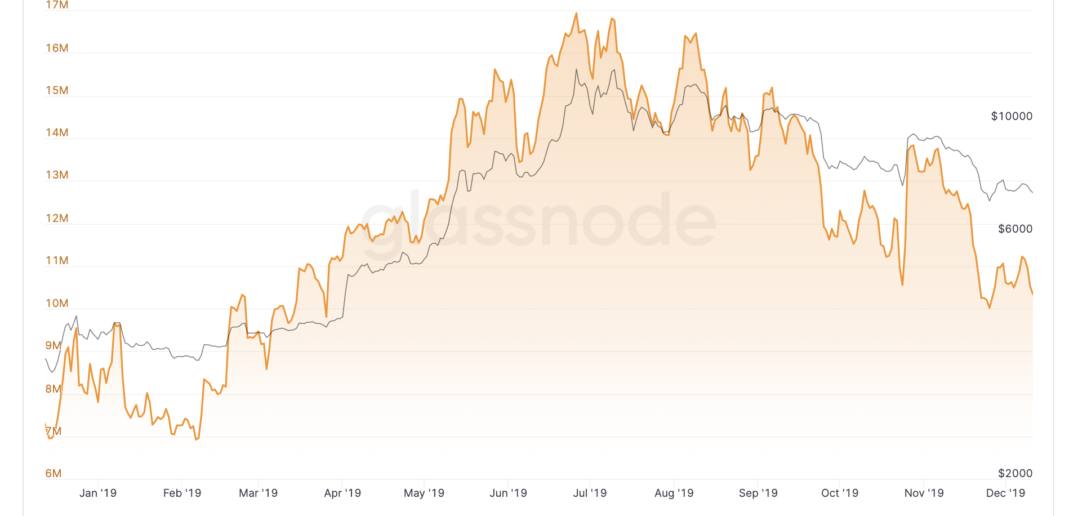
Bitcoin Supply in Profit. Source: Glassnode
Those are the numbers. You have read the numbers.
What nobody is writing about is the specific person those numbers describe. Not the whale. Not the institution. The person who did exactly what they were told to do.
Call him Daniel. He is 38, works in IT in Manchester, and bought his first Bitcoin in late 2024 after years of telling himself he would wait for the right entry. He bought at $83,000. He thought he was late. He was not, at least not yet.
What Watching $126,000 Actually Feels Like
Between October and December 2025, Bitcoin ran from $83,000 to $126,000. Daniel watched it happen on his phone, in real time, across four weeks that felt like a sustained argument for every decision he had ever made.
He did not sell.
This is not stupidity. It is orthodoxy. The entire Bitcoin holding culture is built around a single idea: selling is the mistake. Diamond hands. Stack sats. The people who sold at $1,000 are the cautionary tale, not the people who held. Every podcast, every thread, every long-term chart reinforced the same lesson. The price goes up. Eventually. The people who sell early regret it. Hold.
Daniel held through $110,000. He held through $100,000, when the first cracks appeared and analysts started arguing about whether the cycle was over. He held through $90,000, telling himself he was a long-term holder, not a trader, and long-term holders do not panic-sell.
He held through $80,000. He is currently sitting at roughly $66,000, down about 20% from where he bought. Down 47% from where he watched the price peak in October.
He did not make a mistake by the rules of the game he was playing. He played the game correctly. The game is just not going the way the rules said it would.
The Specific Math Nobody Talks About
The holding thesis has a timeline problem that the charts do not fully capture.
Long-term holder data shows the average cost basis for that cohort sits around $43,000 to $44,000. Those people are still substantially in profit even now. When someone says Bitcoin always recovers for long-term holders, they are technically correct for the cohort that bought in 2020, 2021, or 2023.
Daniel is not in that cohort. He bought at the tail end of the cycle, during the institutional rush that followed ETF approval and the Strategic Bitcoin Reserve announcement. His cost basis is $83,000. For Bitcoin to make him whole, it needs to recover more than 25% from today’s price. For it to give him the gains that drew him in, it needs to get back above $126,000 — a 90% increase from where it trades today.
92% of short-term holders, people who bought in the last 155 days, are currently underwater according to CryptoQuant. The average ETF buyer is sitting on a 15% paper loss with an implied entry price near $90,200. Strategy holds 762,099 Bitcoin at an average cost of $75,694 and is also underwater.
Daniel is not an outlier. He is the market.
What the Advice Missed
The Bitcoin holding thesis has always been correct over long enough time horizons. That is not in dispute. Bitcoin at $66,000 today is still dramatically higher than Bitcoin at any price before 2021. The long-term chart is still intact.
What the advice missed is what it actually costs to be a late cycle buyer waiting for the recovery.
It costs watching the price hit a number that would have made you whole, and declining. It costs the mental accounting of logging in and seeing a loss every day for months. It costs the specific experience of being underwater not because you were reckless, but because you followed the consensus and the consensus bought near the top.
Daniel is not thinking about selling. He said that clearly in a Reddit thread where he laid out the math without asking for advice. He knows the thesis. He understands the four-year cycle. He has read the Glassnode reports and the long-term holder data and the arguments about institutional floors.
He is just tired of looking at the number.
What 4.6 Million BTC Actually Means
The data says 4.6 million Bitcoin held by long-term holders is now underwater. At $66,000 that is roughly $304 billion worth of Bitcoin sitting at a loss in the hands of people who, by definition, have been holding for more than five months.
That number is reported as a market signal. A stress indicator. An input for analysts running models about capitulation probability and support levels.
It is also 4.6 million Bitcoin worth of people who bought because they believed the thesis, held because the culture told them to, and are now calculating a recovery timeline that keeps getting longer as the macro picture gets more complicated.
Today Trump announced sweeping new tariffs, the crypto market shed $180 million in 24 hours, and Bitcoin dropped to $66,000. The Liberation Day tariffs come on top of a war that pushed oil above $100, a Fed that has signaled fewer cuts than markets expected, and long-term holders who have been distributing since March.
Daniel knows all of this. He has read it all. He checks CoinDesk more than he should.
He is not selling. He is not panicking. He is doing exactly what the culture told him to do.
He is just tired of being patient.