

The US economy unexpectedly lost 92,000 jobs in February. The unemployment rate climbed to 4.4%. Under normal market logic, that should have been good news for risk assets.
It was not.
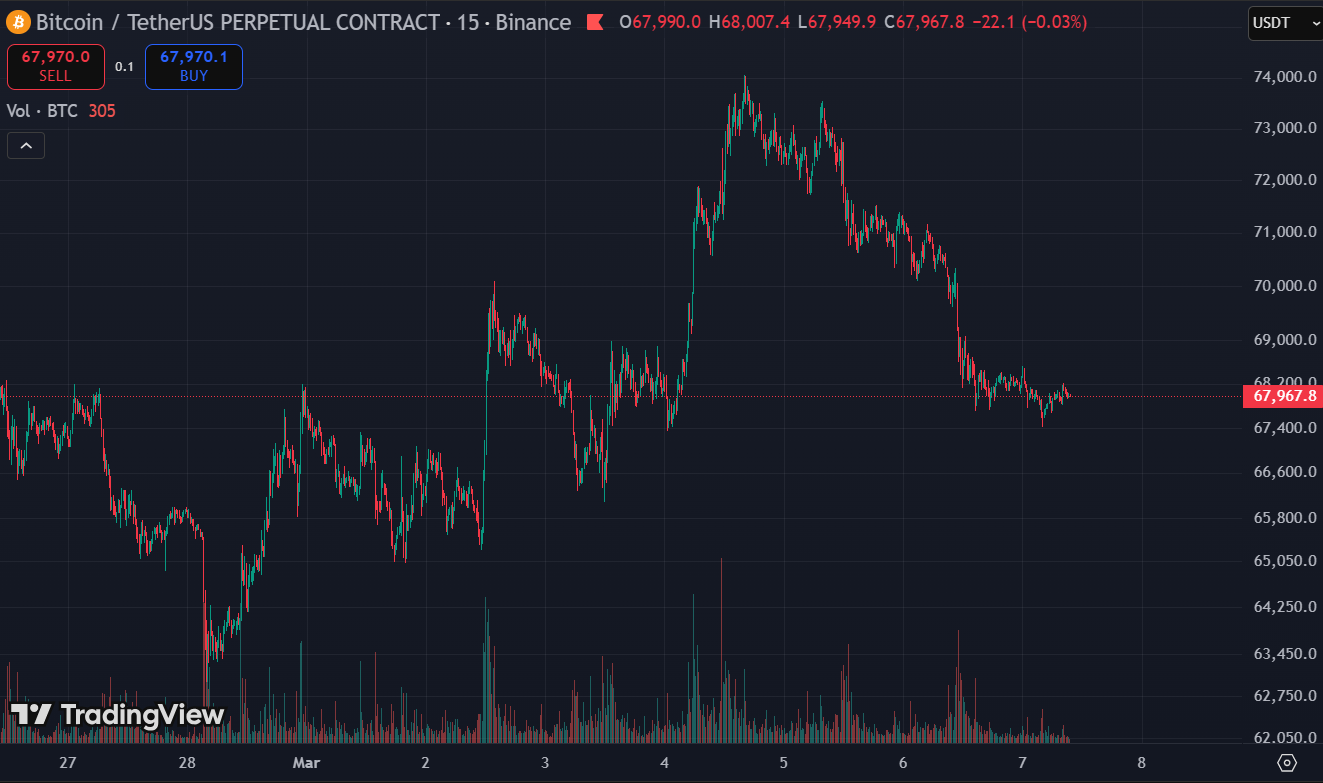
Bitcoin spent the day under pressure, drifting lower even as the weak labor report strengthened the case that the Federal Reserve will need to cut interest rates sooner than expected.
That is the story.
For the last two years, markets have operated under a simple formula. Good economic data is bad for liquidity because it keeps interest rates high. Bad economic data is good for liquidity because it forces the Fed to ease. Liquidity drives risk assets, and few assets respond to liquidity shifts faster than Bitcoin.
By that logic, a jobs report this weak should have been bullish. Instead, the reaction was the opposite.
What the Jobs Report Actually Said
The February labor data broke a narrative that had been holding up the economy for months. The labor market had been the one part of the system that refused to slow down. Inflation cooled, manufacturing softened, housing wobbled, but hiring kept going.
Now it hasn’t.
The US economy lost 92,000 jobs. The unemployment rate rose to 4.4%. That combination matters because it suggests the labor market is no longer absorbing economic stress. Once unemployment starts rising, it tends to keep rising.
For the Federal Reserve, that kind of data narrows the policy options quickly. Holding rates high becomes harder to justify if the labor market starts deteriorating. In theory, that should increase the probability of rate cuts.
The Expected Reaction
Lower interest rates usually benefit assets that depend on liquidity and investor risk appetite.
Bitcoin sits at the extreme end of that spectrum. It does not generate income. It does not have cash flows. Its price responds primarily to liquidity conditions and investor positioning.
That is why the asset surged during the stimulus wave of 2020 and 2021. When money becomes cheaper and more abundant, speculative assets tend to rise.
A weakening labor market should push the Fed toward exactly that outcome. Which makes what happened next unusual.
The Market’s Real Fear
The problem is that markets are not reacting to the rate cuts themselves. They are reacting to the reason those cuts might happen.
Rate cuts that come from falling inflation are positive. Rate cuts that come from economic deterioration are different. They signal something breaking underneath the surface.
The February jobs report looks less like controlled cooling and more like the early signs of a slowdown.
That distinction matters.
If investors believe the economy is weakening faster than expected, they do not immediately rotate into risk assets. They move toward safety first. Liquidity might arrive later, but the first reaction is defensive positioning.
That dynamic is visible across markets. Equity indices wobbled. Financial stocks sold off. And Bitcoin, which usually amplifies broader risk sentiment, moved lower instead of higher.
The Timing Problem
There is also a timing issue.
Even if the weak labor report eventually forces the Federal Reserve to cut rates, the market does not receive that liquidity immediately. Monetary policy works slowly. Investors often need to move through the fear phase of an economic slowdown before the benefits of easier policy appear.
Bitcoin may ultimately benefit from lower rates. Historically it has. But markets rarely move in straight lines between cause and effect. For now, the paradox remains. The economy just delivered the kind of bad news that normally fuels the next liquidity cycle. And Bitcoin is still acting like the slowdown matters more than the stimulus that might follow.
Sources:
- U.S. Bureau of Labor Statistics — February 2026 Employment Situation Report
- Reuters — “US nonfarm payrolls decline in February, unemployment rises to 4.4%”
- Associated Press — “US lost a surprising 92,000 jobs last month as unemployment rose to 4.4%”
- The Wall Street Journal — Markets react to weak labor data and rising economic risks