
October 31, 2008. A person calling themselves Satoshi Nakamoto sent nine pages to a cryptography mailing list. The title was precise: Bitcoin: A Peer-to-Peer Electronic Cash System.
Not a store of value. Not digital gold. Not a reserve asset for nation states. A cash system. Peer to peer. No intermediaries. No trusted third parties. Two people transacting directly, the way cash works, except online and without a bank in the middle.
That system no longer exists.
What Satoshi Actually Built
The opening sentence of the whitepaper is still there for anyone to read: “Commerce on the Internet has come to rely almost exclusively on financial institutions serving as trusted third parties to process electronic payments.”
That was the problem. Trusted third parties. The banks, the payment processors, the intermediaries who sit between every transaction, extract their fee, and introduce the possibility of reversal, censorship, or failure.
Satoshi’s solution was elegant. Cryptographic proof instead of trust. A network of nodes maintaining consensus without any central authority. He wrote it plainly in his announcement to the mailing list: “I’ve developed a new open source P2P e-cash system called Bitcoin. It’s completely decentralized, with no central server or trusted parties, because everything is based on crypto proof instead of trust.”
No trusted third parties. That was the whole point. Nine pages written to solve exactly that problem.
Now look at what Bitcoin actually is in 2026.
The Trusted Third Parties Won
BlackRock’s iShares Bitcoin Trust holds approximately 577,000 Bitcoin in custody. Custodied by Coinbase Custody Trust Company. Verified by quarterly attestations. Managed by the world’s largest asset manager, a company with over $10 trillion under management.
BlackRock does not technically own this Bitcoin. It holds it on behalf of shareholders who own IBIT shares. The shareholders do not hold Bitcoin. They hold a financial product that tracks Bitcoin. Their exposure is mediated by BlackRock, custodied by Coinbase, regulated by the SEC, and accessible through a traditional brokerage account.
Between BlackRock, Fidelity, and the other US spot Bitcoin ETFs, over 1.2 million Bitcoin now sits in institutional custody. The US government holds a Strategic Bitcoin Reserve. Strategy holds 640,031 BTC. Institutional allocators now account for 38% of total spot Bitcoin ETF holdings.
The trusted third parties did not lose. They adapted. They built wrappers around Bitcoin and sold access to those wrappers to the same pool of capital that already trusted them with everything else.
Satoshi wanted to remove trusted third parties from electronic transactions. The most successful implementation of his protocol now routes the majority of new institutional demand through BlackRock, Coinbase, and the SEC.
Nobody Is Using It as Cash
The whitepaper describes a peer-to-peer electronic cash system. The word cash implies spending. Transactions. Commerce.
In 2026, the average Bitcoin transaction fee makes it economically irrational to use Bitcoin to buy a cup of coffee. The Lightning Network, built specifically to solve this problem, has been in development for nearly a decade and remains a technical tool used by a small fraction of Bitcoin holders. The vast majority of Bitcoin held today has never moved and will likely never move. It sits in cold storage, ETF custody, or exchange accounts, functioning as a speculative asset or a reserve holding, not as cash.
93% of Bitcoin’s circulating supply is held by entities that never use it for transactions. The people buying IBIT through their Morgan Stanley brokerage account are not buying coffee in El Salvador. They are allocating 1-3% of a diversified portfolio to a digital asset that their financial adviser told them was worth owning.
This is not what Satoshi described. It is also not entirely his fault.
The Gold Precedent
Gold started as cash. Actual cash. Coins changed hands for goods and services for thousands of years. Governments minted it. Merchants weighed it. Sailors carried it across oceans to buy spices.
Then something changed. Gold became too valuable, too cumbersome, and too impractical to use as cash. Paper money emerged as a claim on gold. Eventually the gold stayed in vaults and people traded the paper. Eventually Nixon ended the gold standard entirely and the paper traded on its own.
Today gold sits in ETFs, central bank reserves, and safety deposit boxes. Nobody buys coffee with gold. Nobody would suggest they should. Gold found its role as a store of value, a reserve asset, a hedge against monetary instability, and the world adjusted its understanding of what gold was for.
Bitcoin appears to be following the same trajectory. The peer-to-peer cash experiment did not fail exactly. It succeeded well enough that the asset became too valuable to spend. And when an asset becomes too valuable to spend, people stop spending it and start storing it.
The trusted third parties followed the value, as they always do.
Would Satoshi Shut It Down?
This is the question the Bitcoin community does not want to ask. Satoshi disappeared in 2010, handing the project to the developer community. He left no instructions for what Bitcoin should become. He left nine pages describing what he intended it to be.
By every measure in those nine pages, Bitcoin has failed its original mission. It is not widely used for peer-to-peer transactions. It has not eliminated trusted third parties from electronic commerce. The financial institutions Satoshi identified as the core problem now hold billions of dollars worth of the solution he proposed.
And yet.
The protocol works exactly as he designed it. The blocks come every ten minutes. The supply cap holds at 21 million. The hash rate just hit 1.153 zettahashes per second, the highest in its sixteen-year history.
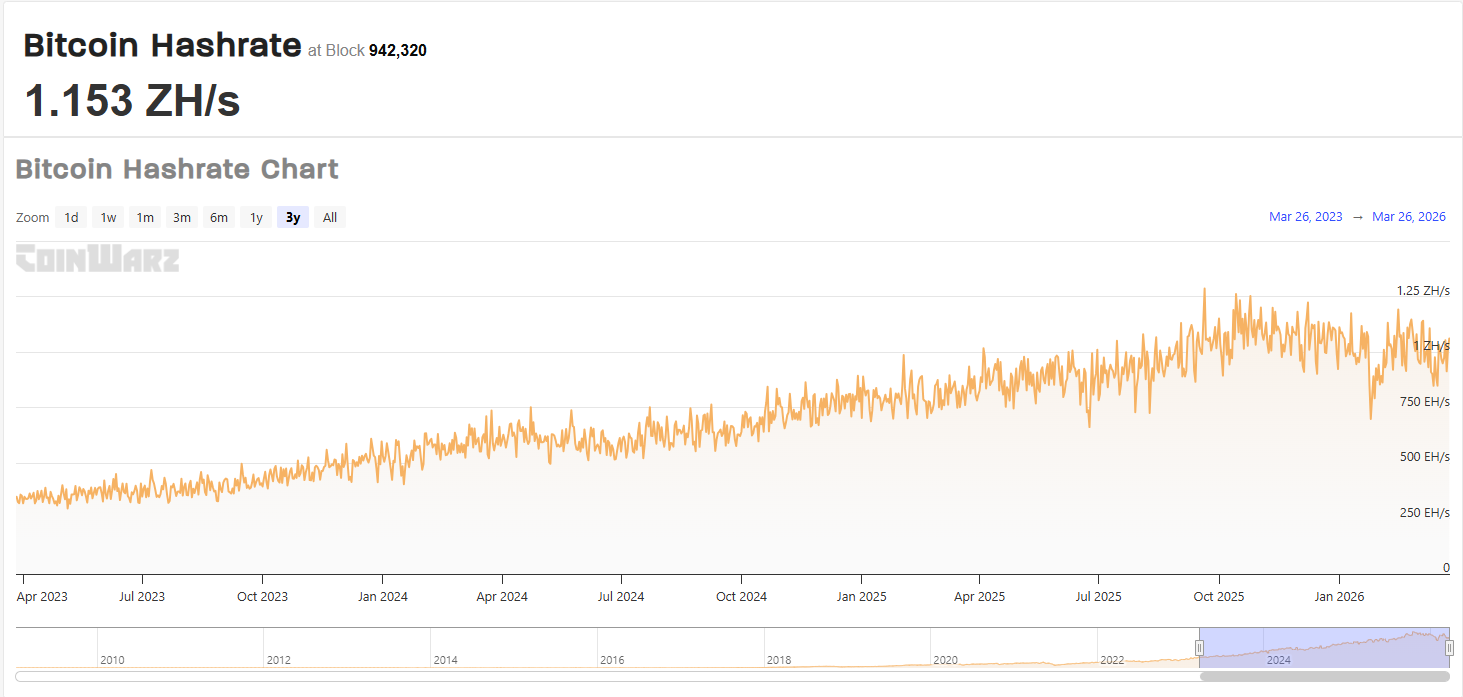
Bitcoin’s hash rate has reached an all-time high, reflecting increased mining activity and network security. (Source: Coinwarz)
No government has been able to shut it down. No company controls it. No regulator can change its monetary policy. The rules Satoshi wrote into the code in 2008 are still running without modification.
What he built to solve the trusted third party problem ended up becoming something the trusted third parties wanted to own. That is either the ultimate failure of his vision or the ultimate proof of its success, depending on how you measure it.
The Uncomfortable Conclusion
Satoshi might have shut it down if he saw BlackRock holding 577,000 Bitcoin in a Coinbase custody account accessible through a Morgan Stanley brokerage. That is almost exactly the system he was trying to replace.
Or he might have understood something that the purity arguments miss. You cannot control what you release into the world. Bitcoin became what the market needed it to be, not what one person intended. The peer-to-peer cash use case found its niche in countries with failing currencies and no banking access. The reserve asset use case found its niche in institutional portfolios and national treasuries. Both are running on the same protocol.
The trusted third parties won the distribution battle. The protocol won the monetary policy battle. Both things are true.
Satoshi wanted to build a system without trusted third parties. What he actually built was a system that trusted third parties could not corrupt, even when they captured it.
Whether that counts as success is the question Bitcoin has been asking since 2010. Nobody who has an answer should be too confident about it.