
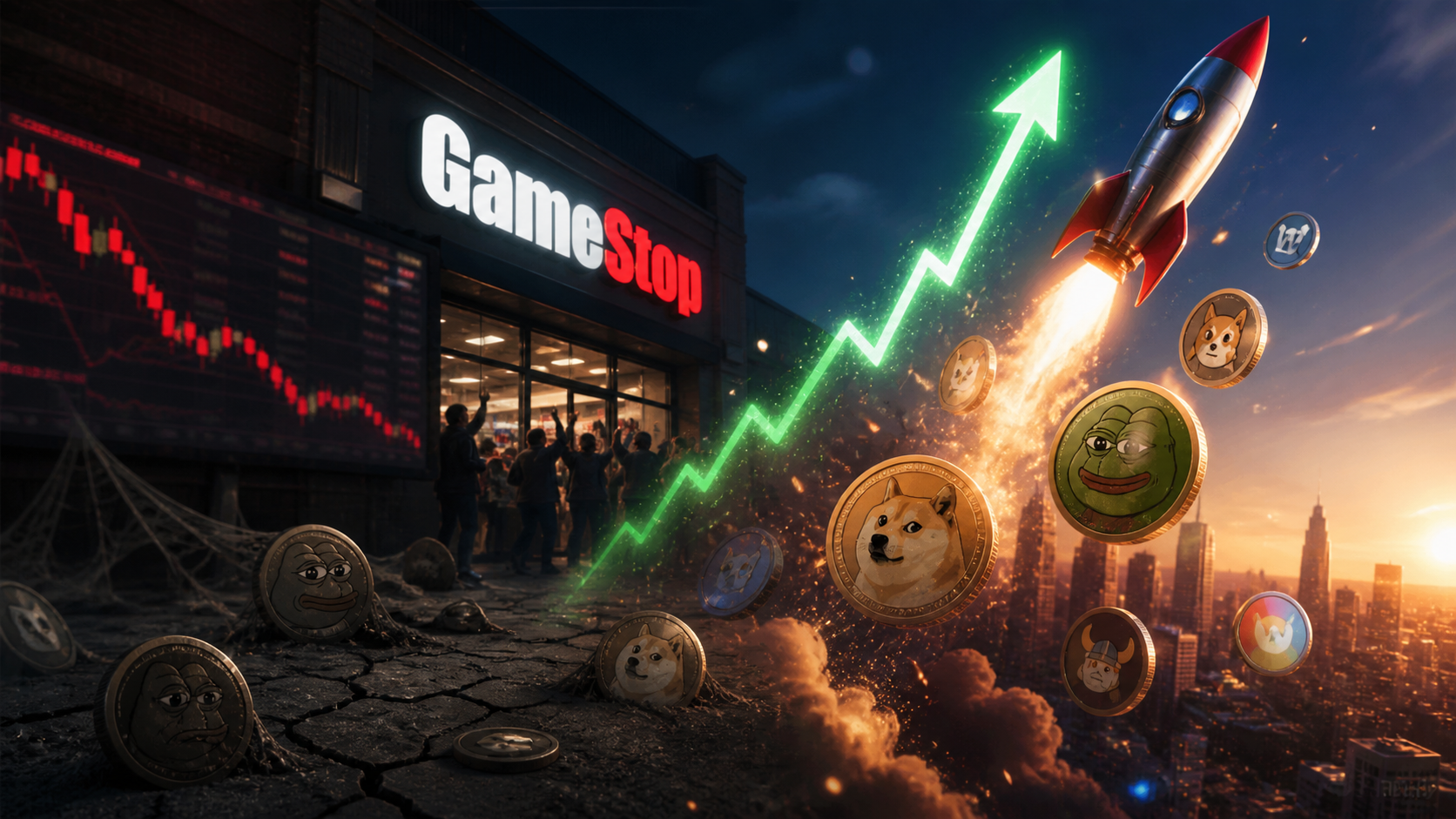
Five years ago, a Reddit forum called r/WallStreetBets turned a dying video game retailer into the most talked about stock on earth. GameStop went from $4 to $483 in three weeks. Hedge funds cried. Retail traders became folk heroes. And the energy from that moment flowed directly into crypto, where Dogecoin, Shiba Inu, and a thousand other memecoins caught the same retail wave and rode it to billions in market cap.
On the night of May 2, 2026, GameStop jumped 9% in after-hours trading. The Wall Street Journal reported that Ryan Cohen is preparing a takeover bid for eBay, a company worth four times GameStop’s current market cap. Reddit went back into overdrive. r/Superstonk lit up. r/wallstreetbets started talking about squeezes again.
The question is not whether GME can move. It clearly can. The question is whether the energy moves into crypto this time. And the honest answer is: probably not the same way. And that tells you something important about where retail is in 2026.
What actually happened tonight
GameStop shares jumped more than 9% in after-hours trading after the Wall Street Journal reported the company has quietly built a stake in eBay and a formal bid could come as soon as this month. Cohen is targeting a $100 billion market cap. He currently runs a $12 billion company. eBay is worth $46 billion. The math requires debt, stock issuance, or both.
Michael Burry, who famously shorted GameStop in 2021 and got squeezed, posted two words on X: “GME and eBay. Makes perfect sense.” Whether that is sarcasm or conviction, the internet did not wait to find out.
Short interest currently sits at 61.91 million shares, about 15% of float, well below 2021 extremes but enough to create sharp moves on any catalyst. That 15% is the fuel. The WSJ report is the spark. The Reddit community is the oxygen.
This is the same setup as 2021. The question is whether it produces the same results downstream in crypto.
How GME created the first memecoin wave
In January 2021, retail traders who won on GME looked for the next explosive play. Crypto was the obvious answer. It was accessible, unregulated, open 24 hours, and full of low market cap assets that could do 10x on a Reddit thread. Dogecoin was already a joke with a loyal community. All it needed was energy and attention. GME provided both.
The pattern repeated every time retail got excited about a meme stock. AMC pumped, crypto pumped. Roaring Kitty came back in 2024, memecoin volume spiked. The correlation was not accidental. The same psychology that drives someone to buy GME because they believe in the movement drives them to buy DOGE because it feels like being part of something bigger than a trade.
That psychology is what created the memecoin market as it exists today. Billions in market cap built on community energy, retail momentum, and the dream of beating institutions at their own game. The Wall Street Journal report, citing people familiar with the matter, confirmed GameStop has quietly built a stake in eBay with a formal bid possible as soon as this month.
Why 2026 is different
We wrote about this a month ago. The retail trader who drove the 2021 memecoin wave has largely left the building. Not because they lost interest. Because they lost money. Repeatedly. In increasingly cruel ways.
The RAVE token is the clearest recent example. An 11,000% pump engineered by insiders who controlled 90% of supply, squeezed retail shorts, extracted profits through funding rates, and left the community holding a 98% loss. That is not a cautionary tale. That is the default mode of the memecoin market in 2026. Insiders with concentrated supply, AI-driven bots front-running retail entries, and exits that happen before most people realize the top is in.
The retail trader of 2021 believed they could beat hedge funds by coordinating on Reddit. The retail trader of 2026 has watched that coordination get front-run by algorithms, exploited by insider teams, and dismissed by regulators as someone else’s problem. The community energy is still there. The trust in the vehicle is not.
GME pumping 9% might get people excited about meme stocks again. But the path from GME excitement to memecoin volume requires retail to believe that the crypto side of the trade is fair. After RAVE, after the dozen DeFi hacks of April 2026, after watching AI agents process 30,000 transactions a month on Base while retail is still trying to set slippage tolerances, that belief is genuinely shaken.
What could change that
Two things would actually revive memecoin energy from a GME catalyst.
The first is a genuine GME short squeeze. Not a 9% pop on acquisition rumors. A full 2021-style squeeze where short sellers are forced to cover at escalating prices and the gains are so explosive that retail feels the dopamine hit all over again. That kind of win reactivates the risk appetite that drives memecoin speculation. 15% short interest can produce a meaningful squeeze if the acquisition news proves out and the stock runs past $35 or $40. It cannot produce a 2021-scale event without significantly higher short interest and a broader market willing to pile in.
The second is a clean, simple memecoin with transparent supply distribution that catches a narrative. The 2021 memecoins worked partly because Dogecoin had been around long enough that no single insider held a controlling stake. The supply was genuinely distributed. That made the community coordination feel real. Most 2026 memecoins cannot say the same thing.
The honest read
GME going up 9% is interesting. Ryan Cohen trying to buy a company worth four times GameStop’s market cap is genuinely wild and worth watching. Michael Burry saying it makes perfect sense is either the best or worst sign depending on your prior.
But the energy that flows from a meme stock into crypto requires retail to feel like winners. Right now, in May 2026, most retail crypto traders do not feel like winners. They feel like they have been systematically extracted from by people with better information, faster algorithms, and insider supply. GME gives them something to cheer about in stocks. Whether it gives them enough confidence to go back into the memecoin casino is a different question.
The market that emerges from a GME squeeze in 2026 is not the same market that emerged in 2021. The participants are more scarred, the infrastructure is more captured by sophisticated players, and the lessons of the last two years are sitting right below the surface of every trade.
Retail learned something. Whether they learned enough is what the next few weeks will tell us.