
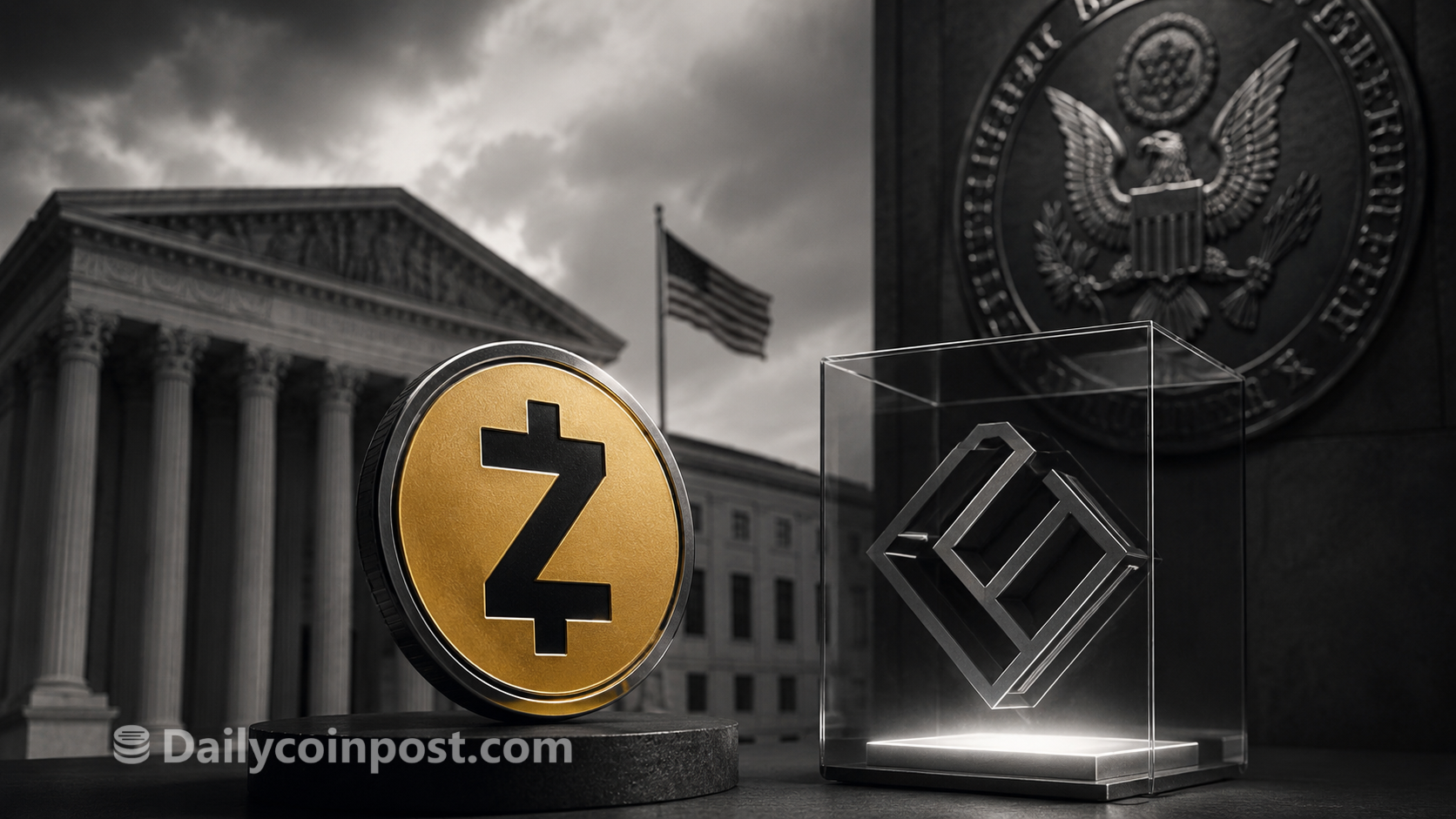
Zcash jumped 40% this week. ZEC touched $805 briefly, a price level it had not seen since November 2025, after trading below $250 in April. The move came from two catalysts landing simultaneously. Grayscale filed its fifth amendment to convert the Grayscale Zcash Trust into a spot ETF. And the broader crypto market was already running on Treasury intervention and short liquidations.
The price move is the story everyone is writing. The ETF is the more important one.
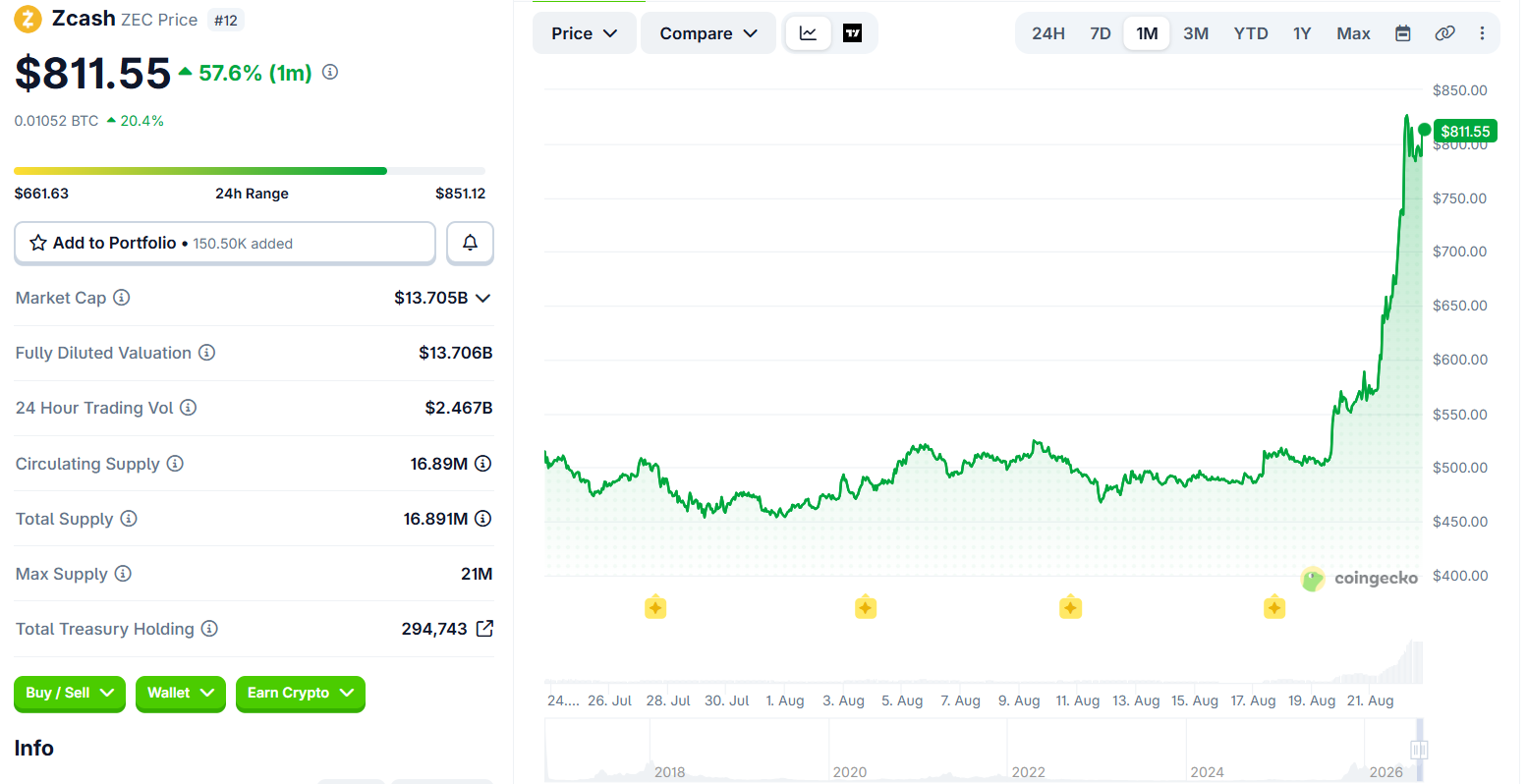
ZEC traded sideways for nearly a month then doubled in four days on the Grayscale ETF filing. The move from $450 to $851 happened almost entirely after August 19. Source: CoinGecko
What Grayscale Actually Filed
Grayscale’s fifth amendment renames the existing trust The Zcash ETF, sets a 2.5% annual sponsor fee, and plans to list on NYSE Arca under the ticker ZCH. Bank of New York Mellon serves as transfer agent. Coinbase Custody holds the ZEC.
The trust has operated since 2017 and held more than $260 million in assets as of Friday. This is not a new product being built from scratch. It is an existing institutional vehicle with a nine-year track record being converted into a regulated ETF structure.
A DCG subsidiary is in discussions to potentially contribute approximately 200,000 ZEC to the fund, representing close to 1.2% of Zcash’s current circulating supply. That contribution is nonbinding but it signals that the parent company of Grayscale is willing to put real capital into the conversion. That is not how you behave if you think the SEC is going to reject the filing.
The Part That Should Make You Think
Zcash is a privacy coin. That is its entire value proposition. ZEC is specifically designed so that transactions can be shielded, making them untraceable on the blockchain.
The same regulatory environment that spent years arguing Bitcoin ETFs enabled money laundering is now reviewing an ETF for an asset specifically engineered to make transactions invisible. The SEC approved Bitcoin ETFs in January 2024 citing sufficient market surveillance mechanisms. Zcash’s shielded transactions exist precisely to defeat those mechanisms.
If Grayscale’s Zcash Trust gets ETF approval, it could open the door for similar products around other privacy-focused protocols. Monero. Dash. Every privacy coin that has spent years being delisted from exchanges over compliance concerns suddenly has a new regulatory template to point to.
That is a bigger precedent than a single 40% price move.
What the Filing Is Not
The filing does not represent SEC approval or confirm a launch date. Fifth amendment means Grayscale has been through this process four times already with the SEC raising objections each time. Bloomberg ETF analyst James Seyffart noted the filing suggests Grayscale is getting closer, not that it has arrived.
ZCSH has not exceeded $5 million in volume since June. The existing trust that this ETF would convert from has been running at minimal activity. The institutional demand for Zcash exposure in its current form is thin. The ETF structure would improve liquidity mechanics but it cannot manufacture demand that does not exist.
The 2.5% sponsor fee is also notably high. Bitcoin ETFs charge 0.12% to 0.25%. Paying 2.5% annually for ZEC exposure is a significant drag on any long-term position. That fee structure suggests Grayscale expects this to be a speculative product for shorter holding periods rather than a core allocation.
The Honest Read
ZEC at $800 is up more than 220% from its April low of $250. A 40% gain in 24 hours is not price discovery. It is compression of weeks of sentiment into hours. ZEC has done this before. It ran 36% to $600 in May and then gave most of it back before the August move.
The fifth amendment is genuinely significant. Five rounds with the SEC means the objections are narrowing not widening. The DCG contribution discussions mean institutional capital is lining up behind the conversion. The James Seyffart validation means the ETF analyst community considers this credible.
But the SEC has never approved a privacy coin ETF. The first one would require the agency to publicly bless an asset whose primary technical feature is defeating the surveillance mechanisms it relies on to approve ETFs in the first place.
That is either the final regulatory frontier being crossed or the reason this one does not make it through. The filing is close enough that the market is betting on the former. The precedent would be significant enough that the SEC has real reason to hesitate.
Watch for the SEC response timeline. If they set a review clock without objecting to the privacy mechanism directly, approval is likely. If they flag the shielded transaction architecture as a surveillance concern, this goes back for amendment six.