


Bitcoin fell from roughly $65,600 on June 22 to $61,800 by the morning of June 23, with the sharpest single move coming between 9:20 and 11:00 that day. In that window, BTC dropped more than 2.3% in under two hours.
Here is what actually happened, in order.
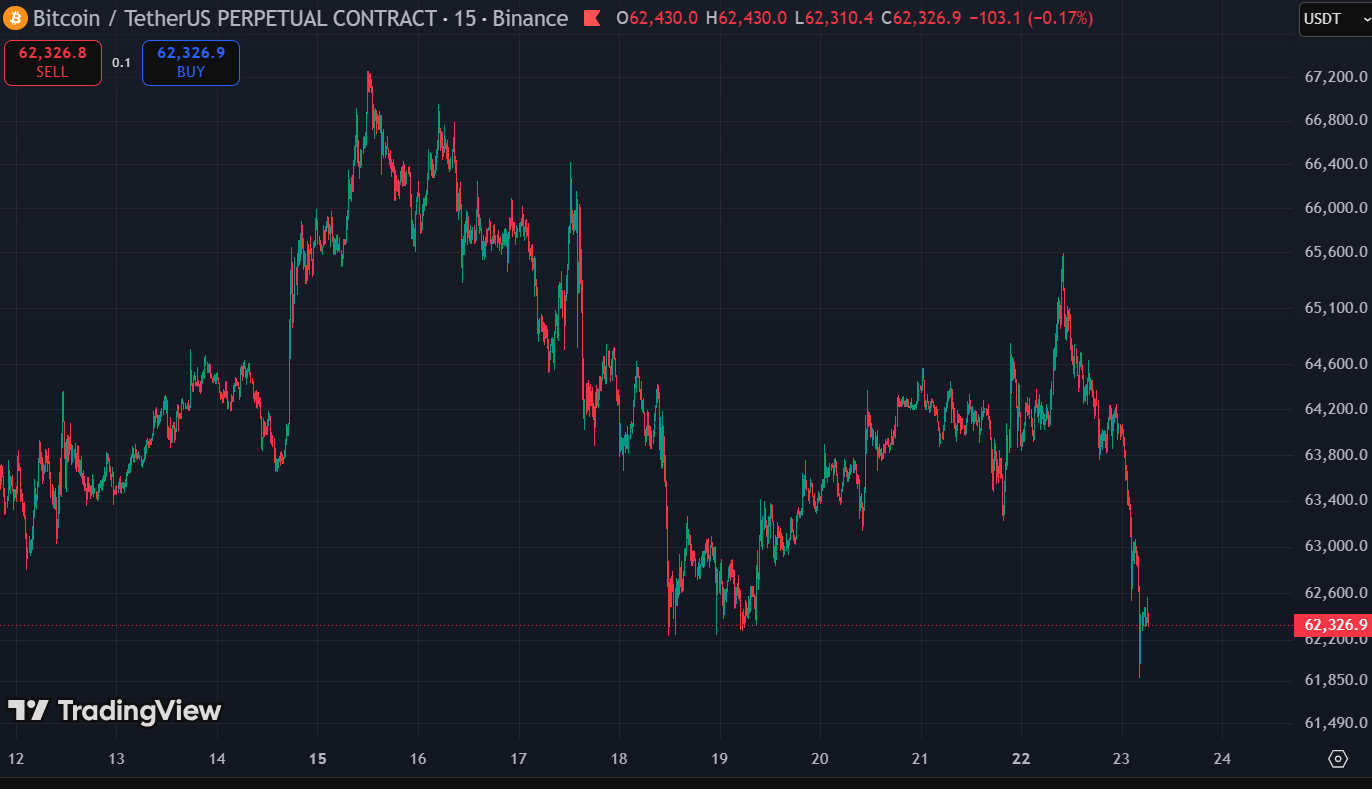
Bitcoin Drops Under $62,000 Source: Tradingview
What Triggered the Drop
Between 9:20 and 11:00 on June 23, Hyperliquid’s BTC/USDC perpetual contract saw nearly 30 concentrated market sell orders totaling $135 million. Open interest data confirmed these were not new short positions piling in. They were large holders closing existing long positions and walking away.
That selling did not happen in isolation. It landed during a broader tech selloff. S&P 500 futures fell 0.8% and Nasdaq 100 futures dropped 1.3%, dragged down by megacap tech stocks. Ether fell even harder than Bitcoin, down 5.6% on the day. Solana dropped nearly 7%. The selling was not concentrated in crypto. It was concentrated in everything that has been riding the AI trade.
That detail matters more than the price action itself.
🚨 BREAKING
🇺🇸 BLACKROCK JUST STARTED LIQUIDATING ALL BITCOIN HOLDINGS AHEAD OF THE U.S. MARKET OPEN!
THEY JUST DUMPED $135,000,000.00 $BTC IN 3 MINUTES AND NONSTOP SELLING EVEN MORE RIGHT NOW.
LOOKS LIKE THEY KNOW BITCOIN WILL DUMP EVEN LOWER TODAY… pic.twitter.com/bZeNEsJehB
— 0xNobler (@CryptoNobler) June 23, 2026
Why This Drop Is Different From the Last Three Months
Every Bitcoin move since February has had a clean geopolitical explanation. Missiles, deal announcements, Hormuz tolls, Fed press conferences. You could point to a headline and explain the candle.
This one does not have that headline. CoinDesk described it plainly: this move marks a departure from recent weeks where Bitcoin’s price action was driven by the Iran story. What is driving it now is the same thing driving the Nasdaq down, rising bond yields and cracks in the AI-stock trade that has carried equities to record highs all year.
Bitcoin is not selling off because of Bitcoin. It is selling off because Nvidia, Microsoft, and the rest of the AI-trade megacaps wobbled, and Bitcoin is currently trading as if it belongs in that basket rather than next to gold.
What $135 Million in Concentrated Selling Actually Tells You
Twenty-seven sell orders in ninety minutes is not retail panic. Retail panic looks like thousands of small orders hitting at once across every exchange simultaneously. Twenty-seven orders averaging roughly $4.6 million each is a small number of large players moving in a coordinated window, which is exactly what institutional position-closing looks like on a derivatives venue like Hyperliquid.
The open interest differential is the detail that confirms it. If new shorts were driving the move, open interest would have risen alongside the price drop, since opening a short position adds a new contract to the book. Instead, the data showed the kind of decline in open interest that matches existing longs being closed out, not new bearish bets being placed. That distinction matters for what comes next. A wave of long liquidations exhausts itself once the leveraged positions are gone. A wave of fresh short interest does not, because it is a bet that keeps pressing until something forces it to cover.
This looked like the first kind. Position-closing, not a new conviction trade against Bitcoin.
What This Means Going Forward
The market is now watching two things that have nothing to do with crypto directly. The US jobs report on July 2. The consumer price index on July 14. Both of those numbers will move bond yields, and bond yields are now the variable Bitcoin is tracking closely enough to fall in lockstep with the Nasdaq on a bad tech morning.
That is worth sitting with for a second. For most of this year, Bitcoin had its own catalyst calendar separate from equities, built entirely around the Iran war and the Fed. That calendar is still relevant. But this week shows a second calendar has opened up alongside it, one that runs on AI earnings, bond yields, and whatever the Fed says about the path of rates that has nothing to do with the Middle East.
Bitcoin trading on the same script as the Nasdaq is not new. It happened constantly in 2023 and 2024. What changed over the past four months is that a second, independent script, the war, took over and Bitcoin’s correlation with tech actually loosened for a while. This week is the first real sign that the old script is back alongside the new one, not instead of it.
Two stories are now driving the same asset at the same time. That is a more complicated trade than the one this market has been running since February, and it is worth knowing which story is talking before reacting to the next red candle.