
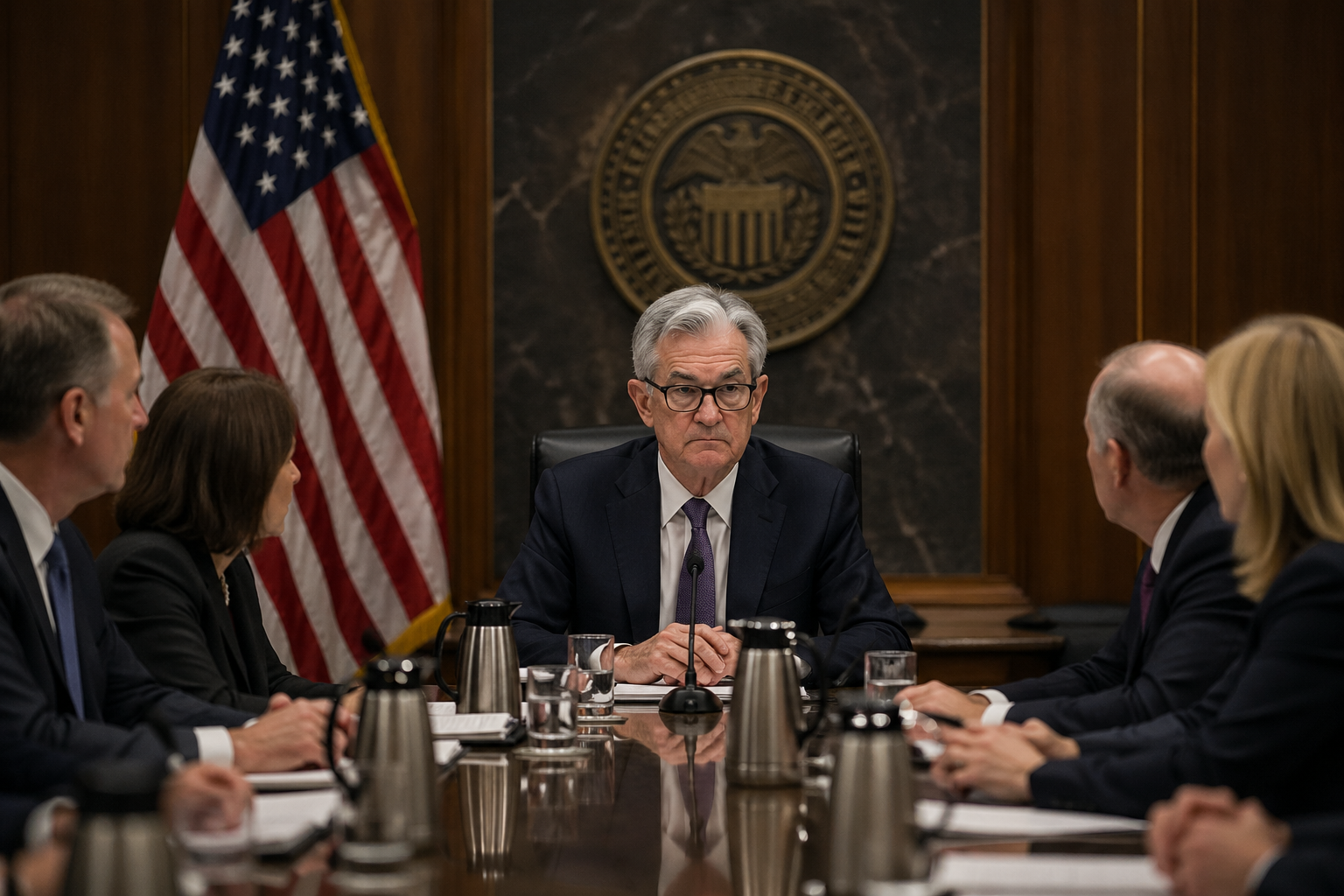
Jerome Powell walked into the Federal Reserve building in Washington this morning for the last time as chairman. He held rates steady at 3.5% to 3.75%. He took questions from reporters. He said he will make his decision about staying on the board based on what is best for the institution.
Then he was done.
On May 15, Powell’s term as Fed chair expires. Kevin Warsh, Trump’s nominee, has cleared the Senate Banking Committee along party lines and is expected to be confirmed by the full Senate in time to take over. The man who spent two years publicly refusing to bend to White House pressure is handing the keys to someone the White House chose specifically because they expect him to be more cooperative. We have been tracking this transition and what it means for crypto since Warsh was first nominated.
For Bitcoin, this is either the most bullish macro development of 2026 or the beginning of a new era of monetary uncertainty. Both arguments are legitimate. Neither is guaranteed.
What Actually Happened Today
The rate decision was not the story. Markets had priced in a 100% chance of a hold at 3.5% to 3.75% and that is exactly what happened. The story was the 8-4 split that accompanied it.
Four members of the FOMC dissented, three because they believed the easing bias language should have been removed from the statement, signaling they are not keen on cutting rates anytime soon. This is not a group of officials quietly disagreeing. This is nearly a third of the voting committee publicly breaking with the chair on his final day. The message was directed less at Powell and more at his successor. We are not going to make this easy for you.
Inflation jumped 90 basis points in March alone, the first month to fully account for the inflationary effects of the Iran war and the Strait of Hormuz blockade. The Federal Reserve Bank of Cleveland’s nowcasting tool is projecting inflation will continue climbing in April and May. The Fed is above its 2% target by more than a full percentage point and the gap is widening, not closing.
Powell held the easing bias in the statement anyway. He said removing it would send the wrong signal given how uncertain the energy supply outlook remains. His dissenters disagreed. Warsh, when he takes over, will have to decide which camp he belongs to.
Who Kevin Warsh Is and Why It Matters
Warsh was Fed Chair Ben Bernanke’s right-hand man during the 2008-09 global financial crisis and his primary liaison to Wall Street. He served on the Federal Reserve Board from February 2006 through March 2011. He knows how the institution works. He is not an outsider.
What Warsh has said publicly since his nomination is worth paying attention to. He wants a leaner Fed balance sheet. He criticized the current $6.7 trillion in assets the Fed holds, primarily long-term Treasury bonds and mortgage-backed securities, as bloated and distorting. Selling those assets means bond prices fall and yields rise. Rising yields are historically bad for risk assets including Bitcoin, at least in the short term.
But Warsh is also a Wall Street man in a way Powell never was. He understands institutional capital flows. He understands that Bitcoin ETFs now represent a significant allocation in institutional portfolios. He is unlikely to be hostile to digital assets in the way that previous Fed regimes were. We covered Warsh’s own crypto investments and the conflict of interest questions surrounding his nomination when he was first named. The infrastructure that Citi, Morgan Stanley, and BlackRock have built around Bitcoin over the past two years did not exist when Warsh last held a Fed position. He will be operating in a fundamentally different financial landscape.
The Senate Banking Committee voted along party lines to endorse Warsh, setting the stage for a full Senate confirmation vote in time for him to take over when Powell’s term expires. The confirmation is not in doubt. The only question is what Warsh actually does once he is in the chair.
The Two Bitcoin Scenarios
The bullish case is straightforward. Trump wants rate cuts. Warsh, whatever his stated preferences, was nominated by Trump and understands the political reality of his position. If Warsh pivots toward cuts faster than Powell would have — and he almost certainly will given the political pressure — liquidity flows back into risk assets and Bitcoin benefits. The US Strategic Bitcoin Reserve means the government is already a Bitcoin holder with an interest in price appreciation. A Fed that leans toward easing while the government holds Bitcoin is a genuinely unusual alignment of incentives.
The bearish case is also real. Inflation jumped from 2.4% to 3.3% in a single month. The Iran war has not been resolved. Oil prices remain elevated. If Warsh inherits a Fed with accelerating inflation and tries to maintain credibility by holding firm or even tightening, the rate cut narrative that Bitcoin has been waiting for since late 2025 gets pushed further out. Bitcoin has been consolidating below $80,000 for months waiting for a macro catalyst. A hawkish Warsh who fails to cut removes that catalyst entirely.
The three dissenters who wanted to remove the easing bias today were sending Warsh a message. Do not assume you can walk in here and start cutting to please the president. The institution has its own views and they will make those views known.
What Changes and What Does Not
Powell’s departure changes the politics of the Fed. It does not change the math. Inflation is above target. Energy prices are elevated. The labor market is weakening but not broken. Those are the conditions Warsh inherits regardless of what anyone wants.
What Powell spent two years protecting was the Fed’s independence from the White House. He refused to cut when Trump demanded it. He refused to resign when Trump threatened to fire him. He used the legal ambiguity around whether a president can remove a Fed chair to maintain his position and by extension the institution’s credibility.
Warsh will not have that luxury in the same way. He was chosen by Trump. Every decision he makes will be interpreted through that lens. If he cuts rates, markets will ask whether he is doing it because the data supports it or because Trump wanted it. If he holds, markets will ask whether he is breaking with his patron or following Powell’s institutional logic. There is no clean path.
For Bitcoin, the Fed transition is one more variable in an already complicated macro picture. Powell leaving removes the one figure who had credibility as an independent actor. What fills that vacuum will define the next phase of the cycle.
The 21 million coin cap does not care who chairs the Fed. The market does.