

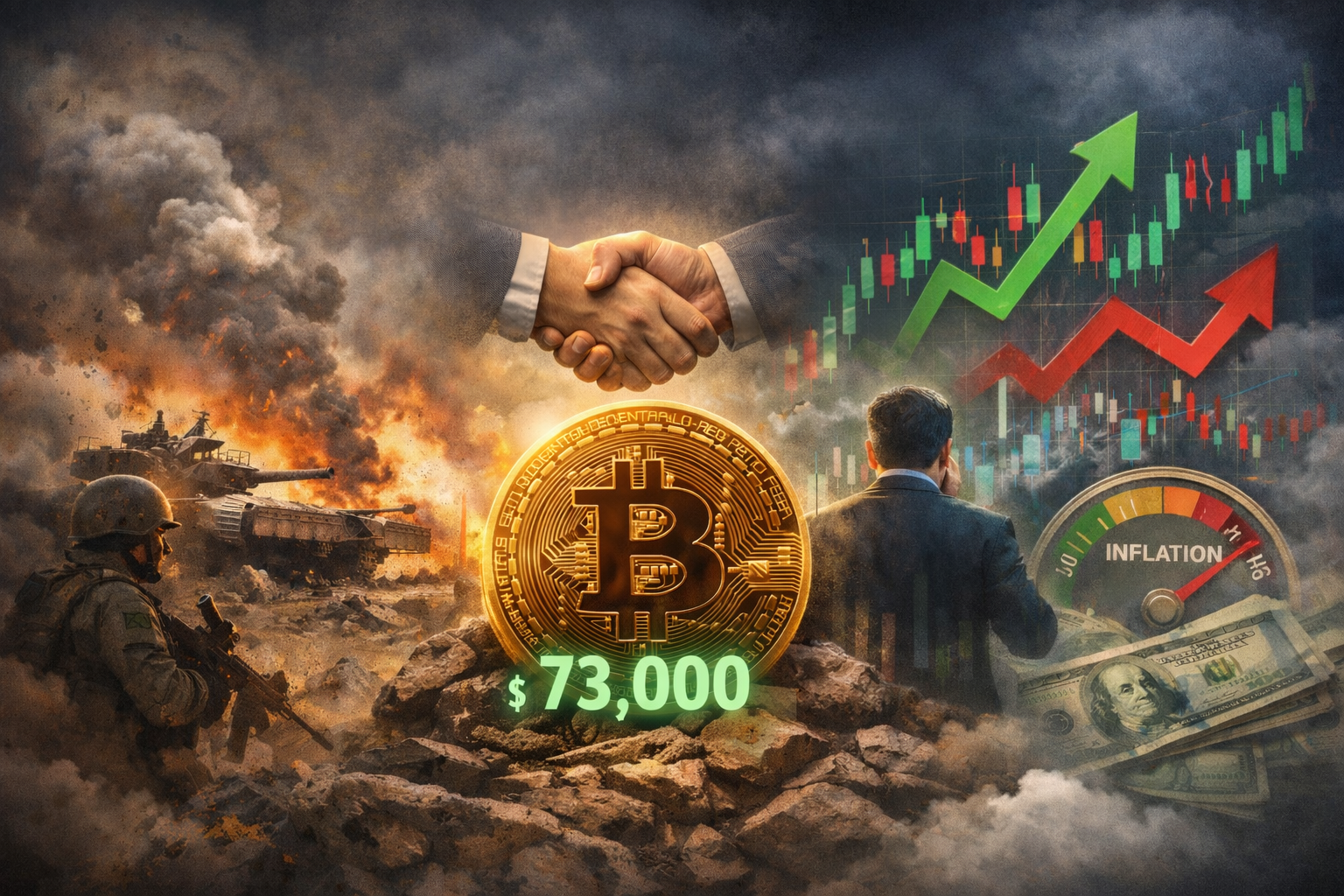
Bitcoin is up 7% this week. It briefly touched $73,000 this morning, its highest level in three weeks, as markets priced in the possibility that the US-Iran war that has dominated macro headlines since February might be moving toward resolution.
Then the March CPI data dropped.
Headline inflation came in at 0.9% for the month, exactly as expected, driven almost entirely by the surge in energy prices that followed the Iran war’s escalation and the Strait of Hormuz disruption. Core CPI, which strips out food and energy, rose just 0.2%, a softer reading than the 0.3% economists had forecast. Bitcoin ticked higher briefly on the core number, then stalled.
That stall tells you most of what you need to know about where we are.
The Ceasefire Trade
The rally this week was straightforward. Reports emerged over the weekend that US and Iranian negotiators were meeting in Pakistan for direct talks, the first meaningful diplomatic contact since strikes began in late February. Markets that had been pricing in an extended war, elevated oil, and persistent inflation pressure suddenly had to reprice for a scenario where some of that reverses.
Bitcoin went from $66,000 to $73,000 in four days. Oil pulled back. Risk assets broadly recovered. The pattern was familiar, it is the same one that played out in March when every ceasefire rumor produced a spike and every denial produced a reversal.
The ceasefire itself remains fragile. Iran’s parliament speaker said three clauses of the proposal had already been violated within 48 hours of signing. The Strait of Hormuz remains effectively closed, Iran has signaled it wants to charge a toll for passage rather than simply reopen the route. Trump has issued repeated ultimatums with repeated deadline extensions. The fifth deadline change in 17 days came and went without resolution.
The peace trade is real. The peace is not confirmed.
What the Data Actually Says
The CPI print is a mixed signal that the market is struggling to interpret cleanly.
BREAKING: March CPI inflation RISES to 3.3%, below expectations of 3.4%.
Core CPI inflation rise to 2.6%, below expectations of 2.7%.
CPI inflation is now up to its highest level since May 2024 amid the Iran War.
Fed rate cuts have been priced-out for 2026.
— The Kobeissi Letter (@KobeissiLetter) April 10, 2026
The good news is core inflation at 0.2% gives the Fed some room. If energy prices fall as the war winds down, headline inflation drops with them and the Fed can justify cuts without looking like it is ignoring the inflation problem. That is the scenario Bitcoin needs, rate cuts loosen financial conditions, risk appetite recovers, institutional flows return.
The bad news is the overall picture remains difficult. GDP grew at just 0.5% annualized in Q4 2025, revised down twice from an initial estimate of 1.4%. Personal income fell 0.1% in February. The economy was slowing before the war started. The war added an oil shock on top of an already weakening base.
Jeffrey Roach at LPL Financial framed it plainly: growth is slowing to around 2%, super core inflation is staying above 3%, and the Fed has no clean path to cuts while oil is at $100 and the Hormuz situation is unresolved. That is not the environment where Bitcoin breaks out. That is the environment where Bitcoin grinds.
The Resistance Level That Keeps Holding
Bitcoin has now tested $73,000 three times since the ceasefire began — and failed to close above it each time. That level has capped every rally during the six weeks of war, according to analysts tracking the options market. Institutional positioning shows call buying at $80,000 but also significant put protection being purchased simultaneously. Conviction is what is missing.
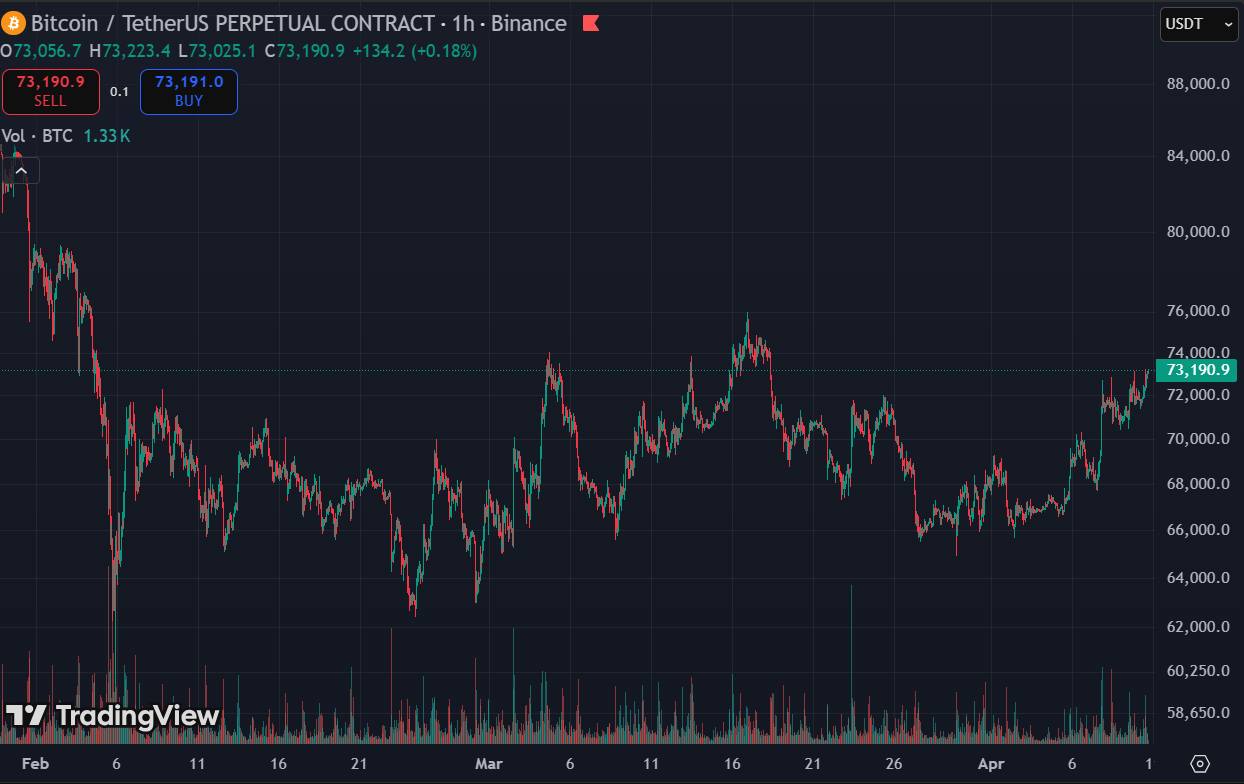
Bitcoin at $73,000 – Source: TradingView
The institutions that built the custody infrastructure and launched the ETFs are still there. Morgan Stanley debuted its own Bitcoin ETF this week, the first Wall Street bank to launch its own product rather than distribute someone else’s. The structural demand is intact.
But structural demand and price momentum are different things. Structural demand sets a floor. Price momentum requires a catalyst that removes uncertainty rather than just reducing it temporarily.
A genuine ceasefire that reopens Hormuz, brings oil back toward $80, and gives the Fed cover to cut rates in June would be that catalyst. Today’s CPI data edges toward that scenario without confirming it.
Bitcoin at $73,000 is the market saying it believes the ceasefire is more likely than not. Bitcoin failing to break $73,000 is the market saying it is not certain enough to bet on it yet.
Both things can be true at the same time. They are.