
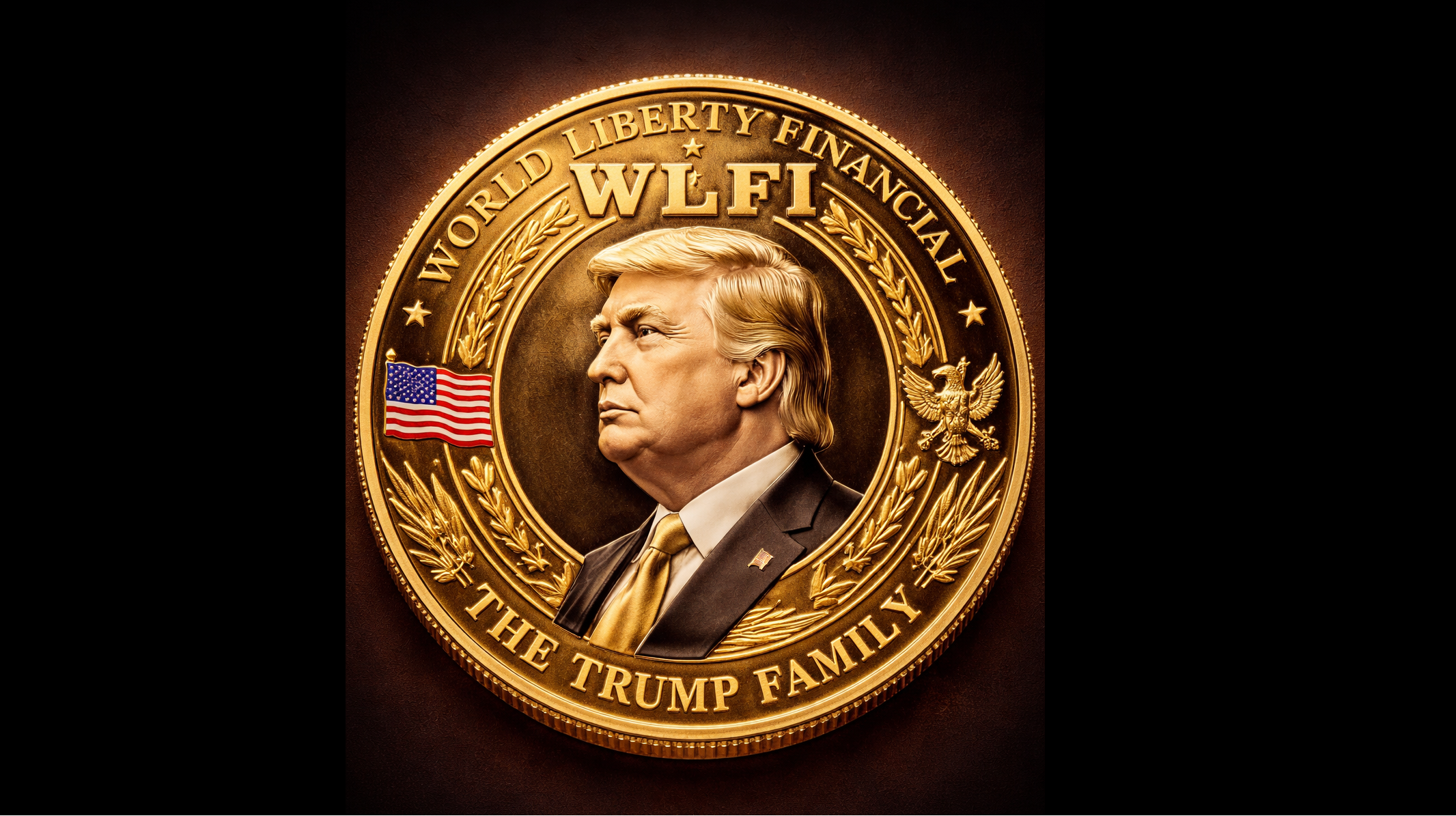
Yesterday, we covered what happened when World Liberty Financial’s treasury deposited 3 billion WLFI governance tokens as collateral into its own lending platform and borrowed 50 million of its own stablecoin against them. The pool hit negative liquidity. The structure was circular by design, with WLFI controlling the collateral, the debt, and the platform simultaneously. We noted the comparison to Terra’s mechanics and where it breaks down: USD1 is backed by US Treasuries through BitGo, not an algorithmic loop, so the floor is real. The pool was technically recoverable.
That was a couple of days ago. Since then, two more problems arrived.
The Sanctions Problem
A Times investigation published Monday found that WLFI’s most recent integration partner, AB DAO, a Southeast Asian blockchain project, had been actively promoting a resort project tied to individuals later sanctioned by the US and UK governments. Those individuals were connected to Cambodia’s Prince Group, which US authorities describe as a major transnational criminal network. They were removed from the AB DAO resort project following sanctions, but the partnership with WLFI was announced shortly after.
WLFI says it conducted due diligence and has no relationship with sanctioned individuals. The Times found no direct connection between WLFI and the Prince Group. What the investigation did find was that WLFI was unaware of the AB DAO connection when it signed the deal. That is the due diligence problem. Not that WLFI knowingly partnered with sanctioned entities. That it didn’t know.
For a project already under Congressional investigation over a reported $500 million stake sold to a UAE-connected entity before Trump’s inauguration, “we didn’t know” lands differently than it would for an ordinary DeFi protocol.
The Price Problem
WLFI is down roughly 10% today. It has lost about 80% of its value from its all-time high last September. The fully diluted valuation sits around $9.4 billion, which means the 3 billion tokens sitting in the lending pool as collateral represent a position whose value is directly tied to market confidence in the project, and that confidence is being tested by the same news cycle that is pushing the price lower.
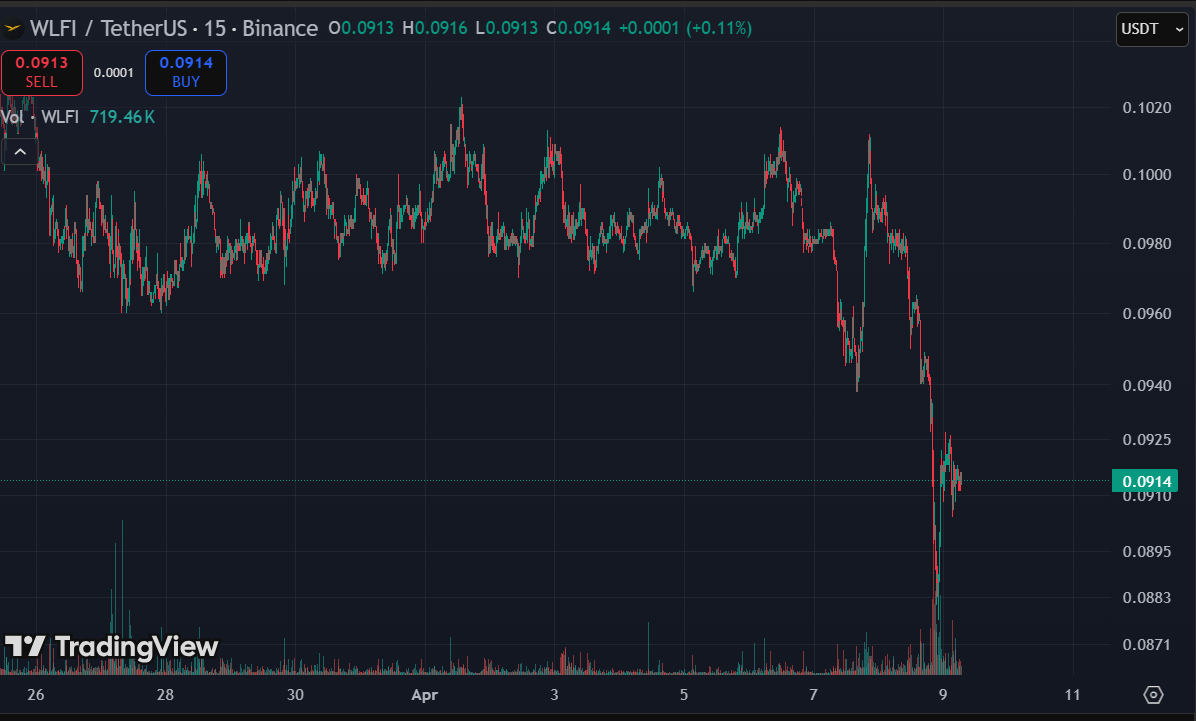
WLFI Drops 10% as Sanctions Problem Adds to Collateral Bet Source: Tradingview
This is the mechanical risk that matters. The collateral underpinning that $50 million loan is WLFI tokens. If WLFI token price continues to fall, the collateral value falls with it. At some threshold, the position gets liquidated. When it gets liquidated, that supply hits the market. When that supply hits the market, the price falls further.
USD1 is fine. The stablecoin has real backing and is not going to zero. But the governance token used as collateral is a different instrument entirely, and it is currently in a drawdown while the project is generating headlines that are not attracting new buyers. Deposit rates inside the lending pool were pushed to 35% annualized not because of genuine borrower demand, but because one entity drained the available liquidity. That entity was WLFI itself.
The Congressional Problem
House Democrats filed a staff report calling WLFI’s activities “presidential self-dealing on an unprecedented scale.” Senators Warren and Reed have urged the DOJ and Treasury to investigate whether WLFI governance tokens were purchased by wallets connected to sanctioned entities in North Korea, Russia, and Iran. A separate House probe is examining the $500 million UAE stake and whether $187 million flowed to Trump family entities.
None of these investigations have produced charges. None of them may. Congressional investigations move slowly and often produce nothing actionable. But they do produce headlines, and headlines move WLFI price, and WLFI price determines the value of the collateral sitting in the lending pool.
The three problems are connected. That is what makes this week different from the lending pool story alone.
What To Watch
The pool is recoverable as long as the collateral holds value and WLFI repays or new USD1 deposits enter the system. The sanctions story is reputationally damaging but not structurally fatal given WLFI’s denial and The Times’ finding of no direct connection. The Congressional investigations are noise until they become signal.
The question is whether all three running simultaneously creates a confidence problem that none of them would create individually. Markets don’t wait for investigations to conclude. They price in the possibility.