

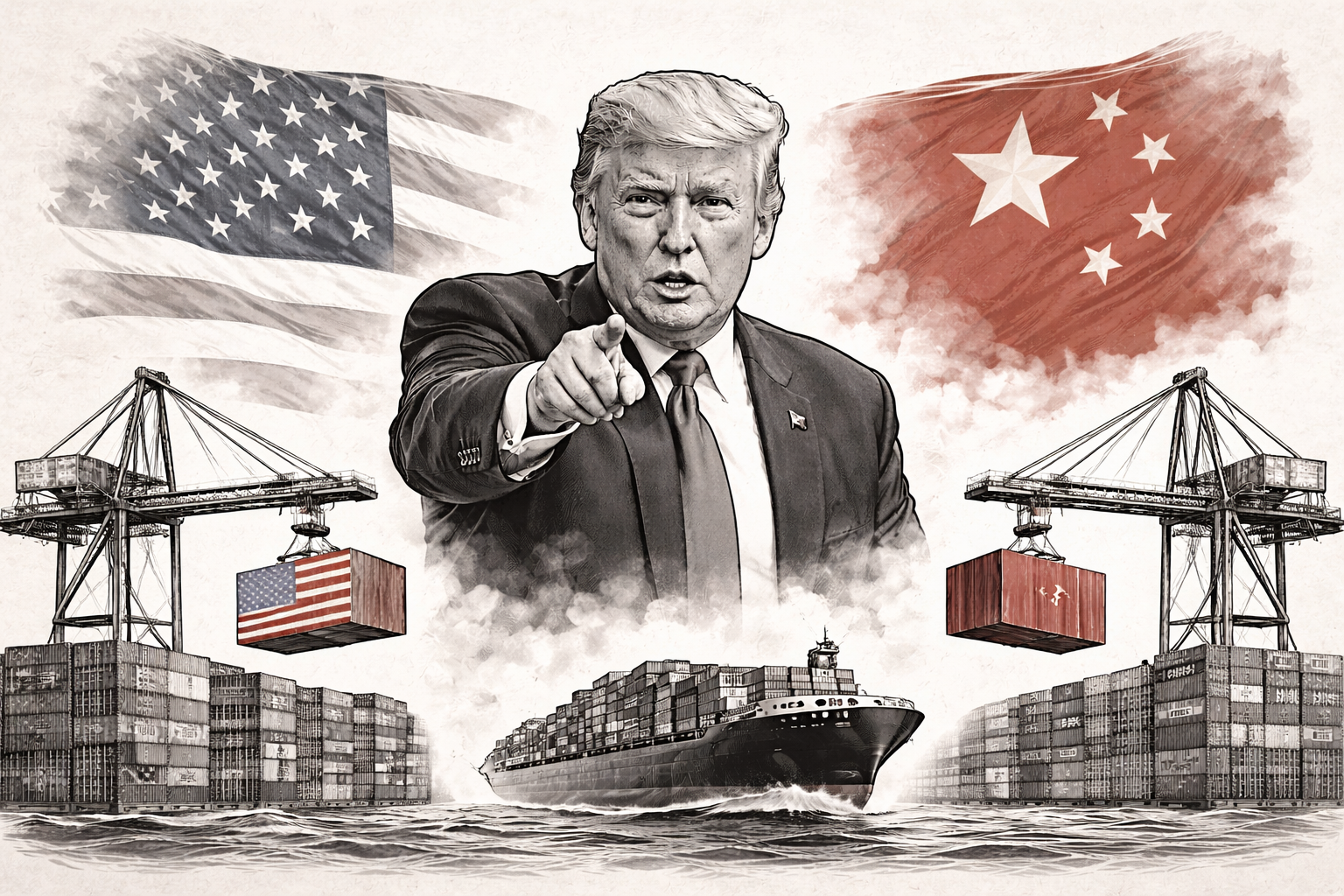
- Trump announced a baseline 10% tariff on imports from 50+ countries on April 2, with rates rising to match foreign tariffs by April 9
- The crypto market shed $180 million in 24 hours as investors rotated out of risk assets
- Bitcoin survived a month of active war in the Middle East — the trade war is a different kind of pressure
A month ago, Trump was signaling he wanted to wind down the Iran war. Markets rallied. Bitcoin climbed toward $75,000. The narrative was forming: de-escalation means lower oil, lower inflation pressure, room for the Fed to cut, risk assets recover.
Today is April 2, 2026. Trump declared it Liberation Day. He announced a sweeping new tariff plan — a 10% baseline on imports from over 50 countries, with reciprocal rates potentially rising to 50% to mirror what those countries charge on US goods. The policy begins April 5. Full reciprocation kicks in April 9.
The crypto market shed $180 million in 24 hours. Bitcoin dropped 6%.
This is the second Liberation Day. The first was April 2, 2025, when Trump imposed sweeping tariffs under emergency powers that the Supreme Court later struck down as unconstitutional in February 2026. Today’s announcement comes under different legal authority. The tariffs are back. The market reaction is familiar.
The Tension Nobody Is Naming
Here is what makes this moment different from every previous tariff shock.
Bitcoin has now had two separate narratives running simultaneously over the past month, both of which were supposed to be bullish.
The first narrative: geopolitical de-escalation. Trump spent March signaling that the Iran war was winding down. The Strait of Hormuz situation remained unresolved but oil pulled back from $120. Bitcoin, which had been sold hard on every escalation headline, was supposed to recover as the risk premium came out of the market.
The second narrative: tariff-driven dollar weakness. Higher tariffs mean higher inflation. Higher inflation means dollar debasement. Dollar debasement is supposed to be Bitcoin’s moment — the argument that a fixed-supply asset benefits when fiat purchasing power erodes. Gold made this trade work perfectly. Gold is up over 60% in the past year.
Bitcoin is down 26% year-to-date. It is down 47% from its October 2025 high.
Both bullish narratives were in play. Neither has worked. That is not a coincidence. It is a signal about what Bitcoin actually is right now in institutional portfolios — and what it needs to become before the narratives match the price action.
Why Bitcoin Is Not Behaving Like Gold
Gold is the clean winner of the current macro environment. Every tariff shock, every Iran headline, every Fed uncertainty event has pushed gold higher. Gold is doing exactly what a safe haven is supposed to do.
Bitcoin is not.
When tariffs hit, institutions sell their most liquid risk assets first. Bitcoin is the most liquid asset trading 24/7. It absorbs panic that has nowhere else to go on a Saturday morning. It is the first asset sold and, importantly, it is often one of the first to recover — but in the initial shock window, it moves with equities, not against them.
Grayscale research director Zach Pandl has described Bitcoin as “transitioning from a pure risk-on asset to something more nuanced.” That transition is real but incomplete. The digital gold thesis has institutional believers. It does not yet have institutional behavior to match.
The stagflation scenario makes this worse. Tariffs raise prices. The Iran conflict keeps oil elevated. The Fed is already signaling only one rate cut for 2026. That combination — higher inflation, slower growth, tighter monetary policy — is the environment where risk assets historically suffer most. Bitcoin is still categorized as a risk asset by the people managing the portfolios that move markets.
This Is the Second Liberation Day
It is worth noting that today is not the first time Trump has announced sweeping tariffs on April 2.
The original Liberation Day was April 2, 2025. Trump imposed tariffs under the International Emergency Economic Powers Act. Markets crashed. Bitcoin dropped sharply. The White House eventually paused the most aggressive reciprocal rates. Then the Supreme Court ruled in February 2026 that the IEEPA tariffs were unconstitutional. The government collected an estimated $166 billion in tariffs that it now owes back to businesses.
Today’s tariffs come under different legal authority. Section 122 of the Trade Act of 1974, which allows a maximum 15% tariff for up to 150 days. The White House is combining that with other legal mechanisms to reach the 10-to-50% range being announced today. Whether this round survives legal challenge is unknown. Whether markets care about the legal uncertainty is a different question — they are selling now.
The pattern from 2025 is instructive. Liberation Day caused a sharp selloff. The White House signaled possible pauses. Markets recovered. Bitcoin recovered faster than equities. The question is whether 2026 follows the same playbook or whether the cumulative weight of war, stagflation, and back-to-back macro shocks has finally changed the pattern.
What the US Strategic Bitcoin Reserve Has to Do With This
There is a specific irony in today’s announcement that deserves attention.
The same administration that established the US Strategic Bitcoin Reserve is now implementing economic policy that is structurally negative for Bitcoin in the short term. The Reserve was created because the people making long-term national financial decisions looked at Bitcoin and decided they wanted exposure to a fixed-supply asset that no government could debase. The tariff policy is being implemented by the same government.
This is not a contradiction in Trump’s worldview. In his framing, tariffs protect American industry, Bitcoin protects American monetary sovereignty, and both are part of restoring national strength. The problem is that financial markets do not price ideology. They price liquidity, growth expectations, and risk sentiment. And today, all three are moving against Bitcoin.
What Comes After April 9
The deadline matters. April 9 is when full reciprocal tariffs kick in for the countries facing rates above the 10% baseline. Between now and then, the most likely outcomes are: countries announce retaliatory measures, markets price in a global slowdown, or the White House signals negotiations and partial pauses.
Every previous tariff cycle under Trump has ended with some form of de-escalation after the initial shock. The 2025 Liberation Day tariffs were paused for most countries within 90 days. That muscle memory is priced into markets — the selloff is real but so is the expectation that it does not last.
For Bitcoin, the question is not whether today’s tariffs are permanent. They almost certainly are not. The question is whether the cumulative macro damage from a year of war, tariffs, stagflation risk, and Fed paralysis has changed the structural demand for Bitcoin in a way that requires more than a policy pause to reverse.
Long-term holders have been distributing since the Fed went hawkish in March. ETF inflows have been inconsistent. The institutional floor is real but it is not unlimited.
Trump ended a war and started a trade war in the same month. Bitcoin was supposed to benefit from the first and hedge the second. The price says otherwise.