


Oil is above $100. US futures hit $108 last week. Brent crude is near the same level, the highest since 2022. The Strait of Hormuz, the chokepoint that moves roughly 20% of the world’s oil supply, is under direct threat. Trump posted Sunday that there would be no deal with Iran except unconditional surrender. There is no diplomatic off-ramp in sight.
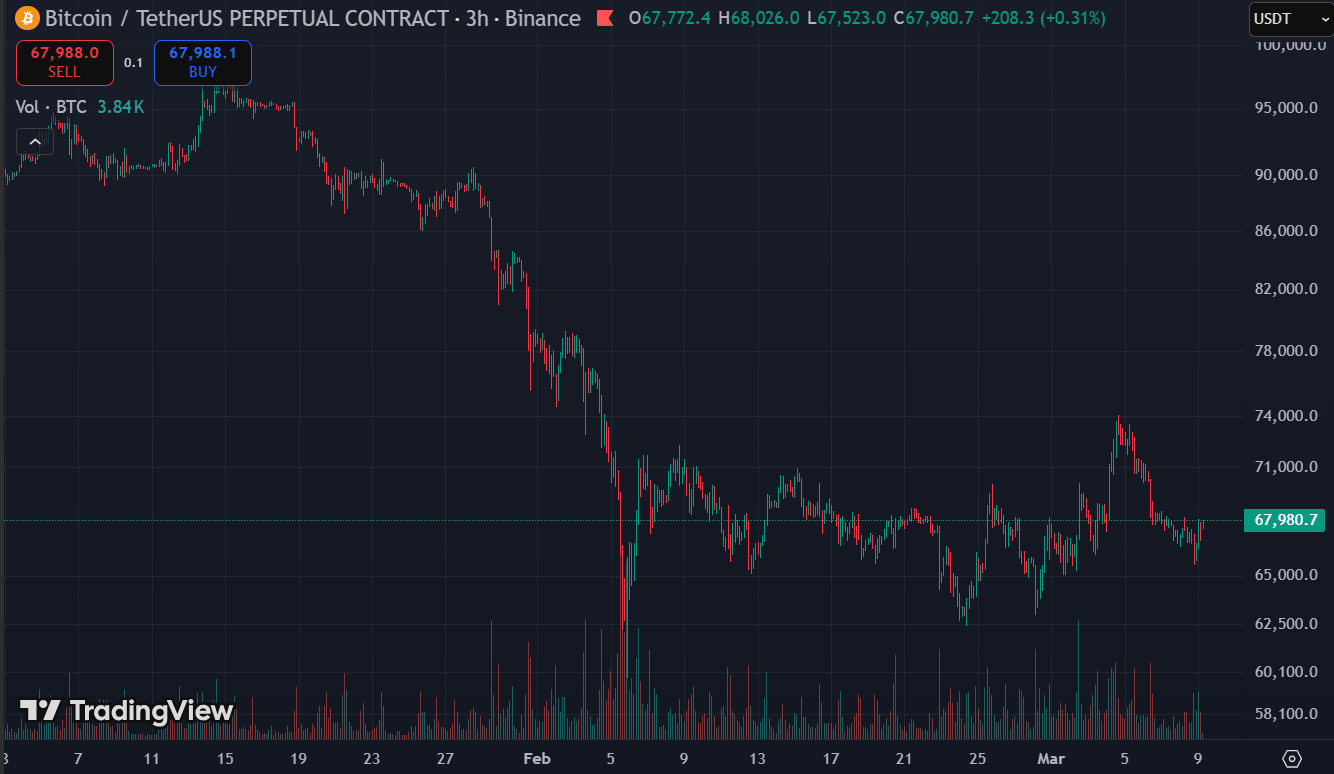
Bitcoin is sitting at $67,980, down nearly 10% over five days, waiting on a CPI print that drops Wednesday morning.
These things are connected. The connection is worth understanding before Wednesday.
The Chain
The Gulf conflict drives oil higher. Oil is a direct input into CPI. It flows through to gas prices, transportation costs, and manufacturing costs within weeks. Goldman Sachs has already flagged that if elevated oil persists for months, US CPI could climb from 2.4% back toward 3% by year end.
That matters because the Fed does not cut rates into rising inflation. It never has.
January CPI came in at 2.4%, the lowest reading since May 2025. Core dropped to 2.5%, its best print since early 2021. The trajectory was right. Markets had priced a first cut arriving sometime in mid-2026. CME FedWatch was showing a 4.4% chance of anything happening at the March 18 meeting, but the direction was clear enough that the expectation was real and Bitcoin had been pricing it in.
Oil at $100 changes that math. Not immediately, not in Wednesday’s number. February CPI was mostly collected before the oil spike. But the inflation being built right now will show up in the March print, released in April, right before the next serious window for Fed action.
Wednesday will probably look fine. Bitcoin might even catch a brief bid if the number comes in cool. That is the false calm part. The actual problem lands a month later.
Why This Matters for Bitcoin Specifically
The relationship between Fed policy and Bitcoin is not perfectly clean, but the direction is straightforward. Rate cuts push liquidity into markets, send investors toward riskier assets, and weaken the dollar. All of that has historically been good for Bitcoin. The 2020 reference case: the Fed cut to near zero, Bitcoin went from $7,000 in April to $28,000 by December.
But the relationship has gotten messier since ETFs arrived. The Fed delivered three rate cuts totaling 75 basis points through 2025. Bitcoin barely responded. The September 2025 cut was followed by a 25% price drop. The institutional adoption that was supposed to mature Bitcoin has tightly coupled it to the Nasdaq instead. When tech sells off, Bitcoin sells off. When liquidity tightens, both get hit.
What that means now: Bitcoin has spent eighteen months pricing in the expectation that rates were heading lower. That thesis required falling inflation, a patient Fed, and easing financial conditions. A Gulf war that sends oil past $100 threatens all three at once.
What Bitcoin Is Actually Caught Between
The geopolitical case for Bitcoin is real. An asset that no government can freeze, no regulator can close, no emergency decree can reach. That argument has had genuine real-world stress tests over the past two weeks and it has held up. The US Strategic Bitcoin Reserve was built on exactly that thesis. The institutional infrastructure Citi is building is not going away because oil is at $100.
But the censorship-resistance case and the rate-cut case are now pointing in opposite directions. The same conflict driving the geopolitical bid is generating the oil spike that kills the Fed pivot. Bitcoin cannot benefit from both at the same time. One of them has to give.
Right now traders are doing the math. That is why Bitcoin is down 11% in five days while the war-hedge narrative is still technically intact. The geopolitical premium is fighting the rate-cut discount and the rate-cut discount is winning in the short term.
Wednesday’s CPI print will not resolve this. It will tell us how the next few weeks look before the real number arrives in April. If oil stays above $100 between now and then, and there is no obvious reason it falls with Hormuz still threatened and no diplomacy in motion, the April print will carry actual weight.
The long-term structural case for Bitcoin does not change with one inflation report. But the next few weeks are going to be uncomfortable. Bitcoin is good at sitting in contradiction. It has done it before. What it cannot do is make two incompatible macro stories both come true at the same time.
One of them is going to have to wait.
Sources:
- Bitcoin, U.S. Stock Futures Give Up Early Gains as Iran Conflict Intensifies — CoinDesk, March 2026
- Fed Rate Cut Exposes Bitcoin’s Inflation Hedge Problem — Investing.com, December 2025
- How Fed Interest Rate Changes Affect Crypto Prices — Crypto.com
- What the Fed’s Rate Cut Means for Crypto Markets — CoinTelegraph