In November 2024, crypto voters showed up. They showed up in numbers the industry had never produced before. They donated, they organized, they voted and they handed Donald Trump a constituency that helped flip states. The pitch was simple: Trump would make America the crypto capital of the world. He would fire Gary Gensler. He would build a Strategic Bitcoin Reserve. He would deliver the regulatory clarity the industry had been waiting a decade for.
He fired Gensler on day one. He signed the executive order on the Strategic Bitcoin Reserve. He appointed industry supporters to every agency that matters.
Then he launched $TRUMP.
Three days before his inauguration, with the world watching, the incoming president of the United States introduced a memecoin bearing his name on the Solana blockchain. It opened at 18 cents. It peaked at nearly $75 the following day. Then it crashed. According to a forensic analysis by Chainalysis commissioned by the New York Times, within nineteen days, 813,294 wallets had lost a combined $2 billion. Meanwhile, the entities behind the coin, including an affiliate of the Trump Organization, collected roughly $100 million in trading fees. For every dollar in fees the Trump crypto creators raked in, investors lost $20. (Fortune, February 2025)
One Trump supporter posted a rocket ship emoji on inauguration day. Eleven days later, he wrote: “Done with this $Trump crap. Sold it all, what a joke.”
That sentence is the political problem the crypto industry is trying to solve before November.
The Worst Bull Market Anyone Can Remember
To understand what November 2026 actually means for crypto, you need to understand what the last fifteen months did to the people who bet on Trump.
Bitcoin hit $69,000 on election night 2024. It ran to $126,000 by October 2025, nearly doubling in twelve months, exactly as promised. The narrative held. The optimism was real. Then it all came undone.
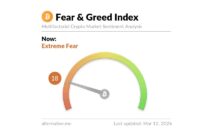
Bitcoin has since fallen nearly 40% from its peak. It has erased all gains since Trump’s election, briefly trading below the price it was on the night he won. The worst bull market in Bitcoin’s history under the most explicitly pro-crypto administration in American history. Major cryptocurrencies ended 2025 with losses. Analysts at Fidelity describe 2026 as a likely “dormant year” for Bitcoin, with price support between $65,000 and $75,000.
The causes are layered. Speculative borrowing juiced the rally and magnified the crash. Macro headwinds, tariffs, sticky inflation, a Fed that cut rates less than the market wanted, hit all risk assets. The post-halving squeeze compressed mining margins. None of that is Trump’s fault directly.
But the memecoin is.
The $TRUMP token didn’t just burn retail traders. It handed Democrats a weapon they have used relentlessly. Cardano founder Charles Hoskinson described the damage plainly: the moment the memecoin launched, crypto went from bipartisan to “crypto equals Trump equals bad equals corruption.” A broadly bipartisan stablecoin bill failed a key Senate vote after Democrats demanded conflict-of-interest provisions specifically designed to stop politicians from profiting off crypto holdings. The CLARITY Act, the most important market structure legislation in the industry’s history, stalled in the Senate for the same reason. Democrats called it the “gryfto” bill.
The policy wins that crypto voters were promised are now being blocked, in part, because of the president they elected.
The $271 Million Calculation
None of this has slowed the industry’s political machine.
Fairshake, the crypto super PAC backed by Coinbase, Ripple, and Andreessen Horowitz, entered 2026 with $193 million in cash reserves, nearly what it spent across the entire 2024 cycle, according to reporting by both Axios and CNBC in January 2026. Total industry political spending has already crossed $271 million for this cycle. The Solana Policy Institute, a new dark money group, is building its own war chest with no donor disclosure requirements. The Fellowship PAC, Protect Progress, Defend American Jobs. There are now more crypto political vehicles than anyone can keep track of.
Fairshake has already scored early wins. In Texas primaries this month, it backed Jessica Steinmann, who won her Republican primary with nearly 70% of the vote, and supported French Hill, the chairman of the House Financial Services Committee and the legislative tip of the spear for crypto bills in the House, who won his primary with 77%. The PAC is simultaneously working to remove Democratic Representative Al Green, who voted against both the GENIUS Act and the CLARITY Act. (CoinDesk, March 2026)
The ads Fairshake buys don’t mention crypto. That’s deliberate. Voters in targeted districts often have no idea the crypto industry is behind the campaigns. The money is not buying opinion. It is buying committee chairmanships and floor votes.
The math is ruthless and clear: $193 million, deployed with the discipline of a hedge fund into the right thirty races, can determine which party controls the House. And the party that controls the House determines whether the CLARITY Act lives, dies, or gets rewritten into something the industry doesn’t recognize.
What November Actually Decides
The CLARITY Act is the most comprehensive financial reform since Dodd-Frank. It would assign oversight of most digital assets to the CFTC, clarify the SEC’s role, and give crypto businesses the regulatory certainty they’ve been operating without for a decade. It has already passed the House. It is stalled in the Senate, where Treasury Secretary Scott Bessent has said it should pass in spring 2026. Whether it does depends almost entirely on what happens in November.
Current projections give Democrats roughly an 83% chance of taking the House while Republicans hold the Senate, according to Polymarket betting as of January 2026. If that happens, committee leadership flips overnight. The CLARITY Act does not get voted down. It gets buried in subcommittee while the new majority focuses on other things. The most likely outcome is a narrower, consumer-protection-heavy version that the industry views as worse than the current regulatory vacuum, or nothing until 2028.
For the crypto lobby, that is the nightmare scenario. Not outright hostility. Just gridlock. Another two years of operating under enforcement-based regulation while the CLARITY Act collects dust.
That’s the calculation behind $271 million. You don’t need to elect a majority of crypto believers. You need to hold enough seats that no one can afford to ignore the industry. In 2024, Fairshake supported 53 candidates who are currently serving in Congress. That is leverage. Not ideology. Leverage.
The Irony Nobody Wants to Say Out Loud
Here is the position the crypto industry finds itself in heading into November 2026.
The president they elected and funded has been, by his own account, the most pro-crypto president in history. He signed the Strategic Bitcoin Reserve. He installed friendly regulators. He pushed landmark stablecoin legislation across the finish line. The GENIUS Act passed. Real wins.
And yet. Bitcoin is trading lower than it was on election night. The CLARITY Act is stalled because the president’s family is too visibly profiting from the industry for Democrats to vote for it. The memecoin that launched three days before his inauguration cost retail investors $2 billion. Trump family crypto ventures including $TRUMP, $MELANIA, and World Liberty Financial have reportedly increased the family’s net worth by $2.9 billion, with 40% of that net worth now held in crypto assets. A president whose family profits directly from crypto price appreciation is now the reason the legislation designed to regulate and legitimize that same industry cannot get the bipartisan votes it needs to pass.
Hoskinson’s observation stings because it’s accurate. The industry spent years building a bipartisan identity. Serious money, serious technology, serious institutions. Then the president wore the brand like a costume, made $100 million in trading fees off his most loyal supporters, and handed every skeptic exactly the narrative they needed.
What Happens Next
The industry’s answer to all of this is money. More money, more races, more ads that don’t mention crypto while advancing candidates who vote for it. That strategy worked in 2024. The question for 2026 is whether it works in an environment where the brand association has shifted.
In 2024, voting for crypto-friendly candidates meant voting for innovation, financial access, and American technological leadership. The pitch was aspirational.
In 2026, voting for crypto-friendly candidates means voting to protect an industry whose most prominent figure launched a memecoin that burned 813,000 of his own supporters while pocketing eight figures in fees. That is a harder sell to a moderate voter who doesn’t hold crypto and is already frustrated with the cost of living.
Fairshake can run ads that never mention any of this. That’s the point of spending $193 million on generic political messaging. But the underlying political reality doesn’t change because the ads don’t acknowledge it.
The CLARITY Act is the last best chance for a comprehensive legal framework before the 2028 election cycle. If it doesn’t pass this year, the industry spends two more years operating in the gap between what the law says and what regulators decide to do on any given Tuesday. Two more years of enforcement as policy. Two more years of waiting.
The crypto voter turned out in 2024 because the stakes were real. The stakes in 2026 are the same. The complications, however, are new.
The blocks keep coming. The math holds. The politics are harder to predict.