
Most people who lose Bitcoin don’t get hacked. They make a preventable mistake — storing coins on an exchange that collapses, photographing a seed phrase, or clicking a fake wallet update. The technology is sound. The failures are human. This guide covers every storage method available in 2026, the real threats you’re up against, and the exact steps to protect your Bitcoin the right way.
Why Bitcoin Storage Is Different From Everything Else
Bitcoin is not stored in a wallet the way cash sits in a bank account. What you’re actually storing is a private key — a cryptographic secret that proves ownership and authorizes transactions on the blockchain. The Bitcoin itself lives on the network. The key lives with you.
This distinction matters more than anything else in this guide. Whoever controls the private key controls the Bitcoin. No exceptions. There is no fraud department, no password reset, no recovery hotline. A transaction signed with your private key is final and irreversible. This is not a bug — it is the core feature that makes Bitcoin valuable. But it means the responsibility for security sits entirely with you.
Modern wallets use a 12 or 24-word recovery phrase, also called a seed phrase, to generate all your private keys. This phrase is mathematically equivalent to your entire wallet. Anyone who has it can access every coin you own on any device, anywhere in the world, instantly. Protecting this phrase is the only thing that matters in Bitcoin security.
The Fundamental Choice: Custodial vs Self-Custody
Before anything else, you need to understand this distinction. It defines everything.
Custodial storage means a third party — usually an exchange — holds your private keys on your behalf. You log in with a username and password. The exchange controls the Bitcoin. You have a claim on it, not ownership of it. This is how Coinbase, Binance, and every other centralized exchange operates. It is convenient, beginner-friendly, and comes with a support team. It also means you are trusting that company’s solvency, security, and willingness to let you withdraw your funds. FTX had a support team too.
Self-custody means you hold the private keys directly. No third party can access your funds, freeze your account, or go bankrupt with your Bitcoin. You are the bank. The tradeoff is that you are also the security department, the backup system, and the recovery plan. There is no one to call if something goes wrong.
For small amounts and active trading, custodial storage is acceptable. For anything you intend to hold long-term, self-custody is not optional — it is the entire point of Bitcoin.
Every Storage Method Explained
Exchange Wallets
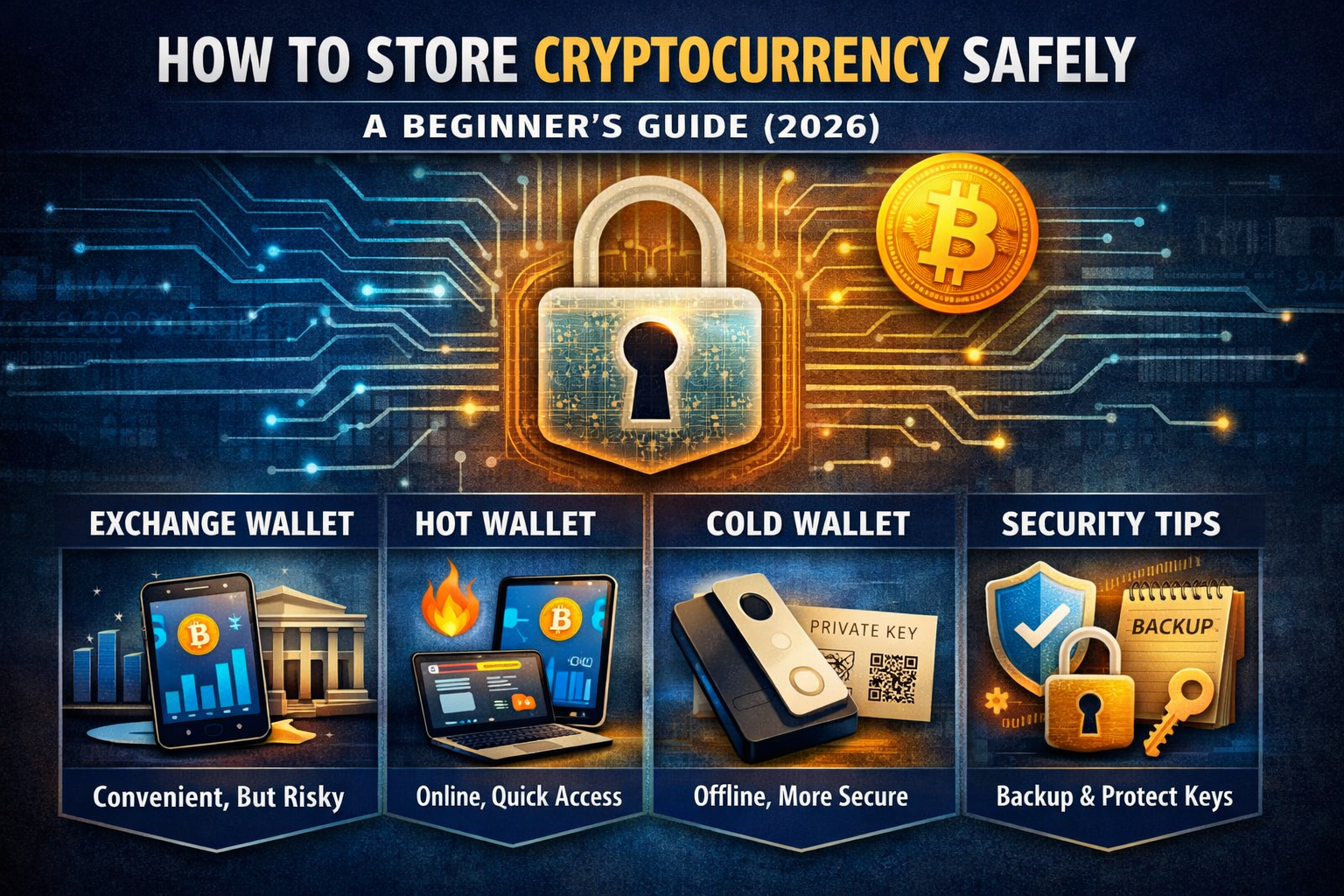
An exchange wallet is the easiest place to start and the worst place to leave Bitcoin permanently. You create an account, buy Bitcoin, and it sits in the exchange’s wallet under your name. The exchange holds the keys.
The risk is not theoretical. Mt. Gox lost 850,000 BTC. Celsius froze withdrawals and went bankrupt. FTX collapsed overnight with billions in customer funds missing. Every cycle produces new exchange failures. The pattern is consistent enough that there is a phrase for it in Bitcoin: not your keys, not your coins. Meanwhile, institutions are moving in the opposite direction — banks like Citi are now making Bitcoin bankable for their clients, which means more on-ramps but the same self-custody responsibility on your end.
Use exchanges to buy. Move your Bitcoin out immediately after.
Hot Wallets
A hot wallet is software you install on your phone or computer that gives you direct control of your private keys. Metamask, BlueWallet, and Exodus are common examples. You generate a wallet, receive a seed phrase, and you’re in control.
Hot wallets are connected to the internet, which makes them convenient and vulnerable simultaneously. Malware can scan your device for wallet files. Fake wallet apps in app stores can steal your seed phrase during setup. Browser extensions can intercept clipboard addresses and replace them with attacker addresses mid-transaction.
Hot wallets are appropriate for spending money — the Bitcoin equivalent of a physical wallet in your pocket. Keep small amounts here. Keep your savings elsewhere.
Hardware Wallets
A hardware wallet is a dedicated physical device that stores your private keys offline. Ledger and Trezor are the two dominant manufacturers. The device generates and stores your keys in a secure chip that never exposes them to the internet. When you want to make a transaction, you connect the device, verify the details on its screen, and physically confirm with a button press. The private key signs the transaction inside the device and never leaves it.
This is the gold standard for Bitcoin security. A hardware wallet can be connected to a compromised computer and remain secure because the keys never touch the computer. The only ways to lose Bitcoin stored on a hardware wallet are losing the device without a backup seed phrase, someone physically stealing both the device and the PIN, or a supply chain attack on a pre-compromised device — which is why you should only ever buy hardware wallets directly from the manufacturer.
Hardware wallets cost between $50 and $200. For anyone holding meaningful Bitcoin, this is the most important purchase you will make.
Cold Storage and Air-Gapped Devices
Cold storage means keys that have never touched an internet-connected device. The most common form is a hardware wallet that has never been connected to the internet, used purely for receiving and long-term holding. More advanced setups involve air-gapped computers — machines that have never been and will never be connected to a network — used to generate and sign transactions offline.
This level of security is appropriate for large holdings or Bitcoin you intend to hold for years without moving. It adds complexity but removes the last remaining attack vectors present even in hardware wallet setups.
Metal Seed Backups
Your seed phrase written on paper can be destroyed by fire, flood, or simple deterioration. Metal seed backup products — steel plates or capsules where you stamp or engrave your 24 words — solve this problem. They are fireproof, waterproof, and corrosion-resistant. For long-term cold storage, a metal seed backup stored in a secure physical location is the final layer of a complete security setup.
The Real Threats You Are Protecting Against
Understanding what actually causes Bitcoin loss is more useful than any product recommendation.
Phishing and fake software is responsible for more Bitcoin losses than any form of hacking. Attackers create fake wallet websites that appear in Google ads. They distribute fake wallet updates via email. They clone legitimate wallet interfaces pixel-for-pixel. The tell is always the same — they need your seed phrase to “restore” or “verify” your wallet. A legitimate wallet will never ask for your seed phrase except during initial setup on a blank device.
Clipboard hijacking is a particularly effective attack. Malicious software monitors your clipboard and replaces any Bitcoin address you copy with an attacker’s address. You paste what looks like the right address, send your Bitcoin, and it goes somewhere else. Always verify the first and last four characters of any address before sending. Always send a small test transaction first.
Social engineering exploits trust rather than technology. Attackers impersonate exchange support staff, influencers, developers, or friends. They create urgency — your account is being suspended, your funds are at risk, you need to act now. They ask for your seed phrase or remote access to your device. The rule is absolute: no legitimate person in the Bitcoin ecosystem will ever ask for your seed phrase under any circumstance.
Physical theft and loss is underestimated by people who focus entirely on digital threats. A hardware wallet stolen with a known PIN is a Bitcoin loss. A seed phrase written on a single piece of paper and stored in one location is a house fire away from permanent loss. Physical security and geographic backup redundancy matter.
User error remains the leading cause of Bitcoin loss and the one nobody talks about. Sending to the wrong address. Losing a seed phrase. Buying a hardware wallet from a third-party reseller with a pre-generated seed. Storing the seed phrase in a photo on iCloud. These are not sophisticated attacks — they are mistakes that cost real money and happen every day.
How to Set Up Secure Bitcoin Storage Step by Step
Step 1 — Buy a hardware wallet directly from the manufacturer. Never from Amazon, eBay, or any third party. Check the packaging for tamper evidence when it arrives. If anything looks opened or modified, return it.
Step 2 — Initialize the device offline. Follow the manufacturer’s setup process. The device will generate a seed phrase and display it on its own screen. Write it down by hand on paper. Do not photograph it. Do not type it into any device. The seed phrase you write down during setup is the only backup of your Bitcoin.
Step 3 — Verify the seed phrase. Most hardware wallets will ask you to confirm your seed phrase after writing it down. Do this carefully. A single incorrect word means your backup is useless.
Step 4 — Store your seed phrase correctly. Write it on two separate pieces of paper. Store them in two physically separate secure locations — a home safe and a safety deposit box, for example. If your budget allows, transfer the words to a metal backup plate. Never store your seed phrase digitally in any form.
Step 5 — Send a test transaction. Before moving any significant amount to your hardware wallet, send a small amount, verify it arrived, then practice restoring from your seed phrase on a second device or fresh device reset. Confirming your backup actually works before you need it is the most important step most people skip.
Step 6 — Move your Bitcoin off exchanges. Once your hardware wallet is set up and your backup is confirmed, withdraw your Bitcoin from any exchange to your hardware wallet address. Verify the address character by character before sending.
What Happens Next
Bitcoin storage is not a one-time setup — it is an ongoing practice. Seed phrases need to be checked periodically to confirm they are still legible and intact. Hardware wallet firmware should be updated from time to time. Physical storage locations should be reviewed as your life circumstances change.
The US government’s decision to build a Strategic Bitcoin Reserve and never sell its 328,000 BTC is the clearest signal yet that self-custody and long-term holding is the right posture. When the most powerful government on earth treats Bitcoin as a permanent reserve asset, the case for taking your own storage seriously has never been stronger.
The Bitcoin you secure today could be the most valuable asset you own in a decade. The 21 million coin hard cap means every Bitcoin in existence is finite and irreplaceable. A compromised seed phrase or a lost backup cannot be undone. The effort required to store Bitcoin correctly is small relative to what is at stake.
Self-custody is not advanced Bitcoin usage — it is the baseline. It is the point. Take it seriously from the first day.
Sources: